Homemade sourdough flour tortillas are a simple way to turn everyday pantry ingredients into soft, flexible wraps for tacos, burritos, quesadillas, sandwiches, and more. This easy sourdough tortilla recipe uses sourdough discard, all-purpose flour, coconut oil, baking powder, salt, and hot water to create a tender dough that is quick to prepare and easy to cook on a skillet. Unlike many traditional sourdough recipes, these tortillas do not require a long fermentation period, making them especially convenient when you want fresh homemade tortillas for a weeknight meal.
Why Make Homemade Sourdough Tortillas?
There are plenty of reasons to make sourdough flour tortillas at home. Freshly cooked tortillas have a soft texture and flexibility that make them ideal for folding around your favorite fillings without breaking easily. The dough comes together with basic ingredients, and the tortillas cook in a hot frying pan within minutes.
They can be served immediately while warm or prepared ahead and frozen for later meals. This makes the recipe useful for busy families, meal preparation, and anyone who regularly has extra sourdough discard available.
Soft, Flexible, and Easy to Use
The texture is one of the best features of these homemade tortillas. A properly prepared dough produces tortillas that are soft, tender, and flexible enough to wrap around fillings. The combination of all-purpose flour, coconut oil, sourdough discard, and hot water helps create a dough that can be rolled thin and cooked quickly.
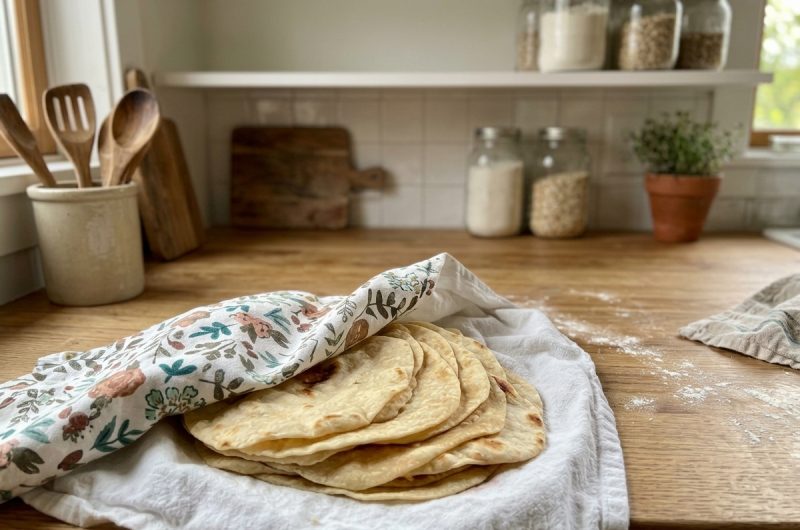
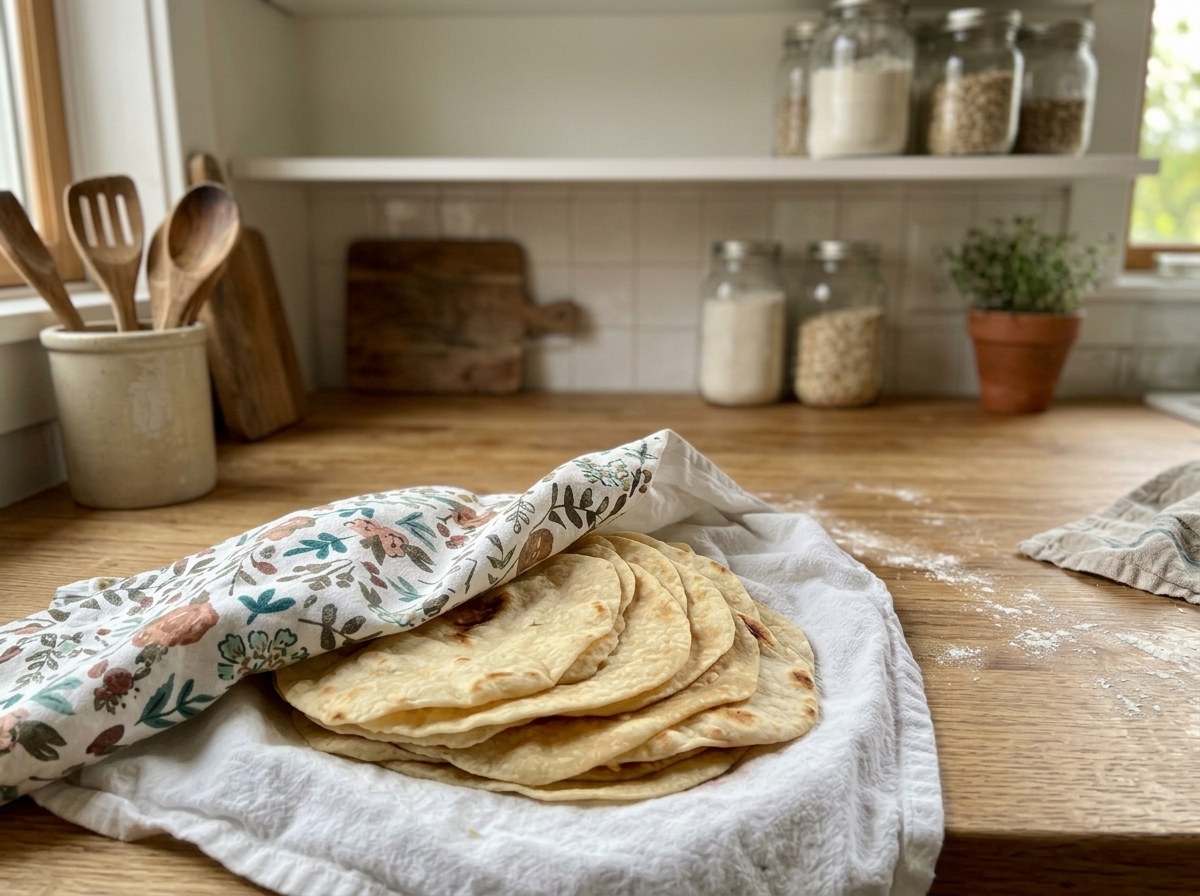
When the finished tortillas are stacked inside a clean kitchen towel, the trapped steam helps keep them warm and pliable instead of allowing them to dry out immediately.
A Great Recipe for Sourdough Discard
If you regularly maintain a sourdough starter, you probably have discard that needs to be used. Instead of throwing that extra starter away, it can become part of a practical recipe such as these sourdough discard tortillas. The discard contributes moisture and sourdough flavor while fitting naturally into the dough.
The age of the discard can also influence the final flavor. Older discard generally gives the tortillas a more noticeable tang, while younger discard produces a milder result.
Ingredients You Need
All-Purpose Flour
All-purpose flour forms the main structure of the tortilla dough. Its relatively moderate protein content helps produce a softer tortilla rather than an overly chewy or tough one. The flour should be measured accurately so the dough has the right balance with the sourdough discard and water. The source recipe uses 350 grams of all-purpose flour, which is approximately 2.5 cups.
Sourdough Discard
Sourdough discard is an important ingredient in this recipe. The recommended discard is 100% hydration and should ideally be at room temperature. Older discard can provide a stronger sourdough taste, while younger discard gives a gentler flavor. If refrigerated discard is being used, allowing it to warm before mixing can make it easier to incorporate into the dough.
Coconut Oil or Lard
Coconut oil contributes to the soft and flexible texture of the tortillas. It can be used in either liquid or solid form. The original recipe also allows lard as an option. When solid coconut oil is used, it can be worked into the dough while kneading. The finished tortillas are not intended to have a strong coconut flavor, so the oil works mainly as a source of richness and tenderness.
Baking Powder
A small amount of baking powder helps the tortillas puff slightly during cooking. Those small air pockets contribute to the light texture and are a familiar feature of homemade flour tortillas. Only a small quantity is needed, so it is important to use the amount listed in the recipe rather than adding extra.
Salt
Salt provides seasoning and helps balance the flavor of the flour and sourdough discard. Because tortillas are often paired with strongly flavored fillings, properly seasoned dough creates a better foundation without making the tortilla itself overpowering.
Hot Water
Hot water plays an important role in the texture of the dough. It helps relax the gluten, making the dough easier to knead and roll. The recipe calls for 180 grams of hot water, approximately three-quarters of a cup, at 100°F or warmer.
How to Make Sourdough Flour Tortillas
Mix the Dough
Begin by combining the all-purpose flour, baking powder, and salt in a large bowl. Whisk the dry ingredients together so the baking powder and salt are evenly distributed. Add the coconut oil or lard, sourdough discard, and hot water. Work the ingredients together until they form a dough, then knead until the dough becomes soft and smooth. The source recipe gives approximately five minutes for hand kneading, while a stand mixer can be used for about two to three minutes.
Let the Dough Rest
Once the dough has been kneaded, cover it with a clean kitchen towel and let it rest at room temperature for about 20 minutes. This resting period is important because it gives the gluten time to relax. Dough that has rested is easier to roll, especially when you are trying to create very thin tortillas. Skipping or shortening the resting time can make the dough more likely to spring back when you roll it.
Divide the Dough
After the initial rest, transfer the dough to a clean work surface and divide it into portions. For larger tortillas measuring about 10 inches, divide the dough into 10 pieces. For smaller tortillas measuring approximately 8 inches, divide it into 16 pieces. Try to keep the portions as even as possible so the tortillas cook at a similar rate.
Shape the Dough Balls
Shape each portion into a small, smooth ball. One simple method is to cup your hand around each piece and move it in a circular motion against the countertop. Once all the portions have been shaped, cover them with a kitchen towel and allow them to rest for approximately five minutes while the frying pan heats. This short rest can make the individual dough portions easier to roll.
Heat the Frying Pan
Place a 12-inch frying pan over medium-high heat and heat it to approximately 400–450°F. The pan needs to be hot before the first tortilla goes in. A properly heated pan allows the tortilla to begin cooking immediately and helps encourage the characteristic bubbles that develop during cooking. The exact heat may need to be adjusted after the first tortilla depending on how quickly it browns.
Roll the Tortillas Thin
Lightly flour a pastry mat or clean countertop. Take one dough ball and dust both sides lightly with flour. Use a rolling pin to roll the dough into a thin circle. Rotate the dough approximately 45 degrees after each roll so that it gradually forms a round shape instead of becoming long or uneven. Continue rolling until the tortilla is very thin, almost thin enough to see through.
Rolling the dough thinly can take a little practice. If the dough repeatedly springs back instead of staying in place, give it another short rest before continuing. Gluten can remain elastic even after the first resting period, and a few additional minutes can make the dough noticeably easier to roll. A tortilla press may help flatten the dough, but the source notes that a rolling pin is still useful for getting the tortillas thin enough.
Cook the Tortillas
Carefully lift the rolled tortilla and place it into the hot frying pan. Cook for about one minute, watching for bubbles to develop across the surface. Once the tortilla puffs and begins to cook through, flip it and cook the second side for approximately 30 seconds. The cooking time can vary depending on the pan and heat, so use the appearance of the tortilla as a guide.
If the tortilla is browning too quickly before it has had time to cook properly, reduce the heat. If it remains pale and does not develop bubbles, increase the heat slightly. The first tortilla can be used to determine the ideal temperature for the remaining batch. The goal is a tortilla with light browning and a soft, flexible texture rather than a dry or crispy result.
Keep the Tortillas Warm
As each tortilla finishes cooking, place it inside a clean kitchen towel on a plate. Stack the tortillas together and keep them covered while cooking the rest. The steam created between the warm tortillas helps preserve their softness and flexibility. This small step makes a noticeable difference, especially if you are preparing several tortillas before serving the meal.
How to Get Soft Sourdough Tortillas
Give the Dough Enough Rest
Resting is one of the simplest ways to improve the texture and handling of tortilla dough. If the dough is difficult to roll or repeatedly shrinks back after being flattened, allow it to rest for several more minutes. This gives the gluten additional time to relax and can make the rolling process much easier.
Roll the Dough Evenly
Try to maintain an even thickness as you roll. Rotating each dough piece by approximately 45 degrees after every few rolls helps encourage a round shape. Avoid adding excessive flour during rolling because too much flour can make the finished tortillas drier. Use just enough flour to prevent sticking.
Use the Right Pan Temperature
A hot pan is essential for getting tortillas to puff and develop small air pockets. The source recommends approximately 400–450°F for the frying pan. However, heat can vary from one stovetop and pan to another, so the first tortilla should be treated as a test. Adjust the temperature as necessary to achieve quick cooking without excessive browning.
Serving Ideas
These sourdough flour tortillas are versatile enough to use in many different meals. Serve them with taco fillings, shredded chicken, cooked beef, beans, vegetables, cheese, or other favorite toppings. They can also be used for breakfast burritos, wraps, quesadillas, or sandwiches. Their soft texture makes them particularly useful whenever you need a flexible homemade flatbread that can hold a filling without becoming difficult to fold.
The tortillas can also accompany meals such as curry or soup. Because they are cooked on a skillet rather than baked in an oven, they can be prepared alongside the rest of a meal without requiring a separate baking process. Fresh tortillas can make a simple dinner feel more complete while giving you control over the ingredients used in the bread.
Long-Fermentation Option
Although this is designed as a quick sourdough tortilla recipe, the dough can also be given additional time to ferment. After mixing the dough, shape it into balls and let them rest at room temperature for approximately four to eight hours, depending on the temperature and activity of the sourdough discard. The dough may puff slightly during this period.
Another option is to cover the dough balls and refrigerate them overnight. This creates a longer fermentation process for those who prefer to prepare the dough ahead of time. If refrigerated dough is used, allow it to come back toward room temperature before rolling so that it is easier to handle.
Make-Ahead and Storage Notes
Refrigerating the Dough
The dough can be prepared ahead and refrigerated overnight. Before rolling the tortillas, allow the dough to come to room temperature. This makes the dough easier to flatten and shape. Planning the dough ahead can be helpful when you want fresh tortillas for a meal but do not want to complete every preparation step immediately before cooking.
Freezing Cooked Tortillas
Cooked tortillas are best enjoyed fresh, but leftovers can be frozen for longer storage. Place the tortillas in an airtight container and freeze them for up to approximately three months. When you are ready to use them, allow them to defrost at room temperature or warm them in the microwave. Freezing is useful because refrigeration can cause tortillas and other baked goods to lose moisture and become less tender.
Notes for Better Results
Choosing Sourdough Discard
Use 100% hydration sourdough discard for the most consistent results. Room-temperature discard is easiest to combine with the other ingredients. If you prefer a noticeable sourdough flavor, older discard can be used. For a milder flavor, choose younger discard. These differences allow you to adjust the character of the tortillas without changing the basic recipe.
Handling Coconut Oil
Coconut oil may be used either solid or liquid. Solid coconut oil can be incorporated into the dough during kneading. If preferred, the source recipe also permits lard, vegetable shortening, or softened butter as alternatives. These substitutions can slightly change the texture, so the original coconut oil remains the primary option for the recipe.
Keeping Cooked Tortillas Flexible
Do not leave cooked tortillas uncovered while preparing the rest of the batch. Stack them inside a clean kitchen towel immediately after cooking. Keeping them covered allows the warmth and steam to remain around the tortillas, helping prevent them from drying out. This is especially important when preparing a large batch for tacos, wraps, or quesadillas.
Sourdough Flour Tortillas Recipe
Soft and flexible homemade sourdough flour tortillas made with sourdough discard, all-purpose flour, coconut oil or lard, baking powder, salt, and hot water.
10
servings10
minutes20
minutes197
kcal20
50
minutesIngredients
350 grams all-purpose flour, about 2.5 cups
5 grams salt, about 1 teaspoon
2 grams baking powder, about 1/2 teaspoon
70 grams coconut oil or lard, about 1/3 cup
125 grams sourdough discard, 100% hydration, about 1/2 cup
180 grams hot water, about 3/4 cup, 100°F or warmer
Directions
- Mix the Dough
Add the all-purpose flour, baking powder, and salt to a large bowl and whisk to combine. Add the coconut oil or lard, sourdough discard, and hot water. Mix everything together, then knead by hand for approximately 5 minutes until the dough becomes soft and smooth. A stand mixer can also be used for approximately 2–3 minutes - Rest the Dough
Cover the dough with a clean kitchen towel and let it rest at room temperature for approximately 20 minutes. This allows the gluten to relax and makes the dough easier to roll. - Divide and Shape
Turn the dough onto a clean counter. Divide it into 10 pieces for 10-inch tortillas or 16 pieces for 8-inch tortillas. Shape each portion into a small round ball, then cover the dough balls and let them rest for about 5 minutes. - Heat the Pan
Heat a 12-inch frying pan over medium-high heat to approximately 400–450°F. The pan should be hot before cooking the first tortilla. - Roll the Tortillas
Lightly flour a pastry mat or clean countertop. Dust both sides of one dough ball with flour and roll it into a thin circle using a rolling pin. Turn the dough approximately 45 degrees as you roll to help create an even, round shape. Roll until the tortilla is very thin. - Cook
Carefully transfer the tortilla to the hot frying pan. Cook for about 1 minute, until bubbles form and the tortilla puffs. Flip and cook the other side for approximately 30 seconds. Adjust the heat if the tortilla browns too quickly or does not cook properly. - Keep Warm
Place each cooked tortilla inside a clean kitchen towel on a plate. Stack the tortillas and keep them covered while cooking the remaining dough. The trapped steam helps keep the tortillas warm, soft, and flexible.
Notes
- Sourdough Discard: Use 100% hydration sourdough discard at room temperature. Older discard gives the tortillas a stronger sourdough flavor, while younger discard produces a milder taste.
- Coconut Oil: Coconut oil can be used either solid or melted. Lard, vegetable shortening, or softened butter can also be used as alternatives.
- Dough Resting: Let the dough rest for about 20 minutes before rolling. If the dough keeps springing back, give it a few extra minutes to relax.
- Rolling: Roll the dough very thin and rotate it about 45 degrees as you work to help create evenly shaped tortillas.
- Cooking: Use a hot skillet, around 400–450°F. Cook each tortilla for about 1 minute on the first side and approximately 30 seconds after flipping.
- Keep Soft: Stack cooked tortillas inside a clean kitchen towel. The trapped steam helps keep them warm, soft, and flexible.
- Make Ahead: The dough can be prepared ahead and refrigerated overnight. Bring it to room temperature before rolling.
- Storage: Freeze leftover cooked tortillas in an airtight container for up to about 3 months. Thaw at room temperature or warm them in the microwave.
Nutrition Facts
- Calories: 197kcal
- Fat: 7g
- Carbohydrates: 29g
- Fiber: 1g
- Sugar: 0.1g
- Protein: 4g