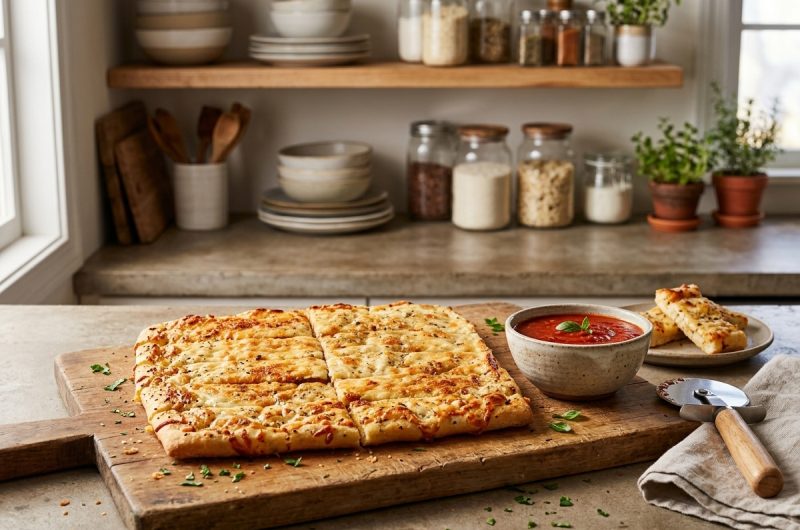
Cheesy Cottage Cheese Breadsticks are a simple, high-protein alternative to traditional breadsticks, made with a savory cottage cheese crust, garlic butter, and plenty of melted mozzarella. The result is soft and cheesy in the center with a golden surface and plenty of garlic flavor.
Because the base uses cottage cheese instead of traditional flour-based dough, these breadsticks are naturally gluten-free and low in carbohydrates while still feeling satisfying enough to serve alongside a meal.
This easy cottage cheese breadstick recipe is especially useful when you want something cheesy and comforting without making a yeast dough. The crust comes together with just a handful of ingredients and requires very little hands-on preparation.
Cottage cheese provides the main structure, while eggs and Parmesan help bind everything together. Italian seasoning, garlic powder, and black pepper give the base a savory flavor before it is finished with garlic butter and mozzarella cheese.
Why Make Cottage Cheese Breadsticks?
One of the best things about these cheesy breadsticks is how little preparation they require. There is no yeast to activate, no dough to knead, and no long rising period. Once the cottage cheese mixture has been blended and spread into the baking pan, the oven does most of the work. With about 10 minutes of hands-on preparation, this recipe is a convenient option for busy weeknights, quick snacks, or an easy appetizer.
These breadsticks also fit several popular eating styles. The recipe is gluten-free, vegetarian, high in protein, and keto-friendly. Cottage cheese is the key ingredient that makes the recipe different from traditional breadsticks. Instead of relying on flour for the base, the cottage cheese mixture creates a savory baked crust that can hold the garlic butter and melted mozzarella topping.
What Makes the Crust Different?
Traditional breadsticks are usually made from wheat flour, yeast, water, and other ingredients that create a stretchy dough. This version takes a completely different approach. Cottage cheese is blended with eggs, Parmesan cheese, and seasonings to create a smooth mixture that can be spread directly into a baking pan. Once baked, the mixture becomes firm enough to cut into individual sticks.
Draining excess moisture from the cottage cheese is an important part of getting the right texture. Cottage cheese naturally contains a considerable amount of moisture, and too much liquid can make the crust difficult to set properly. Taking a moment to remove excess moisture before blending helps the crust bake more evenly and makes it easier to handle after it comes out of the oven.
The Role of Cottage Cheese
Cottage cheese is the star ingredient in this recipe and gives the breadsticks their distinctive texture. When blended with eggs and Parmesan, the curds disappear into a smooth mixture that spreads easily across the baking pan. Once baked, the mixture develops enough structure to become a sliceable crust without needing flour.
Its mild flavor also works particularly well with stronger ingredients such as garlic, Parmesan, Italian seasoning, and mozzarella. Rather than dominating the finished breadsticks, cottage cheese provides a creamy foundation that allows the other flavors to stand out. This makes the recipe a good way to use cottage cheese in a savory dish if you normally associate it with breakfast or snacks.
How Eggs Help the Crust
Eggs are important because they act as a binder in the cottage cheese crust. Once the mixture is baked, the eggs help everything hold together and create a firm surface that can be removed from the parchment and sliced. They also contribute to the overall richness of the breadsticks.
For the best result, blend the eggs thoroughly with the cottage cheese, Parmesan, Italian seasoning, garlic powder, and black pepper. A smooth mixture helps create a more even crust. If you do not have a food processor or blender, the ingredients can still be mixed by hand until they are thoroughly combined.
Parmesan and Italian Seasoning
Parmesan cheese adds a salty, savory flavor to the crust while also complementing the mozzarella topping. Because Parmesan has a stronger flavor than mozzarella, a relatively small amount is enough to make a noticeable difference. Italian seasoning adds another layer of flavor, bringing herbs into the crust without requiring several individual dried herbs.
Garlic powder also works directly in the crust, giving the breadsticks a mild garlic flavor before the fresh minced garlic is added to the butter topping. Together, these ingredients make the base flavorful enough to enjoy on its own while also providing a good foundation for the melted cheese.
Preparing the Cottage Cheese Crust
Start by preheating the oven to 400°F and lining a 9×13-inch baking pan with parchment paper. The parchment helps prevent the cottage cheese crust from sticking and makes it easier to lift the baked layer from the pan later. Make sure the parchment is positioned securely and covers the baking surface.
Blend the drained cottage cheese with the eggs, grated Parmesan, Italian seasoning, garlic powder, and freshly ground black pepper. Continue blending until the mixture is smooth. The goal is a consistent mixture without noticeable large cottage cheese curds. If you prefer to mix everything by hand, stir thoroughly until the ingredients are evenly incorporated.
Pour the mixture into the prepared baking pan and spread it evenly. An even layer is important because areas that are significantly thicker or thinner may cook at different rates. After spreading the mixture, gently shake or tap the pan to help level the surface. This simple step can encourage more even baking.
Baking the Crust
Bake the cottage cheese mixture at 400°F for approximately 30 to 35 minutes, or until the crust is golden and set. The surface should no longer look wet or loose, and the baked layer should have enough structure to support the toppings.
The exact baking time can vary slightly depending on the oven and the moisture level of the cottage cheese. Keep an eye on the crust toward the end of the baking time. You want it cooked through and lightly golden before moving on to the garlic butter and cheese topping.
Adding Garlic Butter
While the crust is baking or shortly afterward, prepare the garlic butter topping. Melt the salted butter and combine it with the minced garlic. Once the crust has finished baking, brush the garlic butter mixture over the surface.
This step gives the breadsticks a flavor similar to classic garlic bread. The butter adds richness, while minced garlic provides a fresher and more noticeable garlic flavor than garlic powder alone. Brushing it across the entire crust helps distribute the flavor rather than concentrating it in only a few areas.
Adding Plenty of Mozzarella
After brushing the crust with garlic butter, cover the surface with shredded mozzarella. The recipe uses about 2 cups, or approximately 8 ounces, which creates the generous cheese topping that makes these breadsticks so appealing.
Freshly shredded mozzarella can provide a particularly nice melt, although the important thing is to distribute the cheese evenly. You can also add optional Parmesan, Italian seasoning, black pepper, or chopped parsley if desired. These additions are optional and can be adjusted according to your serving preferences.
Melting the Cheese
Return the breadsticks to the oven until the mozzarella is melted. You can also use the broiler for a quicker finish, but broiling requires close attention. Cheese can change from melted and golden to overly browned very quickly.
If you use the broiler, remember that parchment paper can become dangerously hot and may burn. Keep the pan under close observation and do not leave it unattended. For a more controlled finish, baking until the mozzarella melts is a straightforward option.
Cooling and Slicing
Once the cheese has melted, allow the breadsticks to cool for about 5 to 10 minutes. This short resting period makes a difference because the crust becomes easier to handle as it cools slightly. Trying to remove and slice the breadsticks immediately can make them more difficult to manage.
After resting, carefully remove the baked layer from the parchment and cut it into breadstick-sized pieces. The number and size of the pieces can vary depending on how you prefer to serve them. For an appetizer, smaller sticks work well, while larger pieces can be served as a side with dinner.
What to Serve with Cheesy Cottage Cheese Breadsticks
Marinara sauce is a natural pairing for these cheesy breadsticks. The tomato-based sauce adds acidity and freshness that balances the rich cheese and garlic butter. Place a small bowl of warm marinara alongside the breadsticks for dipping.
You can also serve them with ranch dressing if you prefer a creamy dip. The savory cottage cheese crust, garlic butter, and mozzarella work well with ranch. For a more adventurous combination, a small drizzle of spicy honey can introduce sweetness and heat to the cheesy topping.
Easy Ways to Change the Flavor
Although the original recipe is delicious as written, the toppings can be adapted when you want a different flavor. Crumbled bacon can add a salty, savory element, while additional herbs can make the breadsticks taste more like an Italian-style garlic bread.
You can also replace part of the mozzarella topping with other cheeses such as feta, goat cheese, or fresh mozzarella. Keep in mind that changing the cheese can affect the texture and flavor, so the original mozzarella topping remains a dependable choice when you want a stretchy, melted finish.
Cottage Cheese Breadsticks for a High-Protein Snack
The cottage cheese and eggs provide the main protein in the recipe, while Parmesan and mozzarella contribute additional protein. With approximately 14 grams of protein per serving according to the provided nutrition estimate, these breadsticks can be a more filling choice than many conventional snack-style bread products.
They can be served as a quick snack, appetizer, or side dish. Pairing them with a protein-rich main course can also turn them into part of a satisfying meal. Because the recipe is low in carbohydrates compared with traditional flour-based breadsticks, it can fit comfortably into a low-carb menu.
Gluten-Free and Keto-Friendly Serving Idea
Because the recipe does not use wheat flour, it is naturally gluten-free based on the listed ingredients. It is also low in carbohydrates, with the provided nutrition estimate listing approximately 3 grams of carbohydrates per serving. This makes the breadsticks useful for people looking for a cheesy side without the typical flour-based crust.
If you are following a strict dietary plan, always check the labels of packaged ingredients such as cottage cheese, seasonings, mozzarella, and marinara to ensure they meet your individual requirements. Ingredient labels can vary between brands.
How to Store the Breadsticks
Allow the breadsticks to cool before storing them. Place them in an airtight container and refrigerate them for up to 3 days. Keeping them sealed helps prevent them from drying out and also limits exposure to moisture and odors from other foods in the refrigerator.
When you are ready to eat them, reheating in the oven or air fryer gives the best texture. The oven helps warm the center while allowing the cheese to become pleasantly melted again. The air fryer is particularly useful when you want the edges to become slightly crisp.
Best Reheating Methods
For oven reheating, place the breadsticks in a suitable baking dish or pan and warm them at 350°F for about 8 to 10 minutes, or until heated through. The exact time can vary depending on the size of the breadsticks and how cold they are when they enter the oven.
An air fryer can also work well. Heat the breadsticks at 350°F for approximately 3 to 6 minutes, checking them toward the end of the reheating time. Because air fryers vary in strength and design, start checking early to prevent the cheese from becoming too dark.
Microwaving is not the preferred method for these breadsticks. Although the microwave will heat them, the texture can become softer and somewhat soggy. Oven or air-fryer reheating better preserves the texture of the baked crust and melted cheese.
Notes for the Best Results
Drain the Cottage Cheese
Remove excess moisture from the cottage cheese before blending it with the other crust ingredients. This helps the mixture set properly during baking and reduces the chance of ending up with a crust that is too wet or difficult to slice.
Keep the Crust Even
Spread the cottage cheese mixture into an even layer across the 9×13-inch pan. Gently shake or tap the pan after spreading to help level the mixture. An even layer promotes more consistent cooking from edge to edge.
Watch the Broiler Carefully
If you choose to broil the mozzarella topping, stay close to the oven and watch continuously. Cheese can brown very quickly under direct heat. Parchment paper can also burn, so use caution and avoid leaving the pan unattended.
Allow the Breadsticks to Cool
Give the finished breadsticks 5 to 10 minutes to cool before removing them from the parchment and slicing. This makes the baked crust easier to handle and helps the pieces hold together more effectively.
No Blender?
A food processor or blender makes the crust mixture smooth, but it is not essential. If you do not have either appliance, simply stir the ingredients together thoroughly until the cottage cheese, eggs, Parmesan, seasonings, and pepper are well combined.
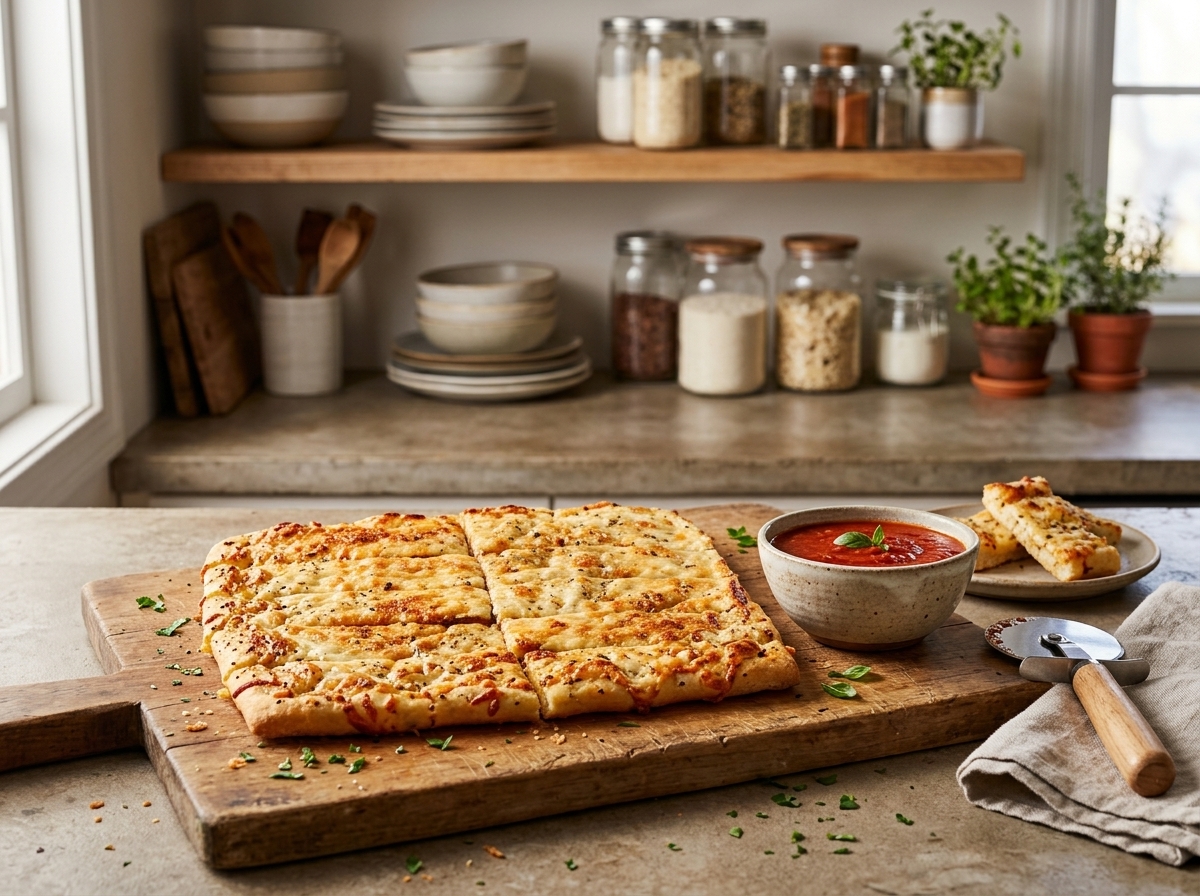
High-Protein Cottage Cheese Sticks
Cheesy Cottage Cheese Breadsticks made with a savory cottage cheese crust, garlic butter, and melted mozzarella.
6
servings10
minutes10
minutesIngredients
- Crust
1 cup cottage cheese, drained of excess moisture
2 large eggs
¼ cup grated Parmesan
1 teaspoon Italian seasoning
¼ teaspoon garlic powder
Freshly ground black pepper, to taste
- Toppings
1 tablespoon salted butter
Marinara, for serving1½ teaspoons minced garlic
2 cups shredded mozzarella, about 8 oz
Optional: extra Parmesan, Italian seasoning, black pepper, chopped parsley
Directions
- Preheat the oven to 400°F. Line a 9×13-inch baking pan with parchment paper.
- Add the drained cottage cheese, eggs, Parmesan, Italian seasoning, garlic powder, and freshly ground black pepper to a food processor or blender. Blend until the mixture is smooth.
- Spread the cottage cheese mixture evenly across the prepared baking pan. Gently shake or tap the pan to help create an even layer.
- Bake for 30–35 minutes, or until the crust is golden and set.
- Melt the salted butter and combine it with the minced garlic. Brush the garlic butter evenly over the baked crust.
- Sprinkle the shredded mozzarella evenly over the crust. Add any optional Parmesan, Italian seasoning, black pepper, or chopped parsley.
- Return the pan to the oven and bake until the mozzarella has melted. Alternatively, broil briefly, watching very closely to prevent the cheese from burning and the parchment from overheating.
- Allow the breadsticks to cool for 5–10 minutes before carefully removing them from the parchment.
- Slice the baked crust into breadsticks and serve with marinara.
Notes
- Drain excess moisture from the cottage cheese before preparing the crust.
- Spread the mixture evenly so the crust cooks consistently.
- If you do not have a blender or food processor, stir the crust ingredients together thoroughly by hand.
- Allow the baked crust to cool before removing it from the parchment and slicing.
- Watch carefully when using the broiler because mozzarella can brown quickly and parchment paper can burn.
- Store cooled breadsticks in an airtight container for up to 3 days.
- Reheat in a 350°F oven for 8–10 minutes or in an air fryer at 350°F for 3–6 minutes.
- Microwave reheating is not recommended because the breadsticks may become soggy.
Nutrition Facts
- Fat: 14g
- Carbohydrates: 4g
- Sugar: 2g
- Protein: 14g