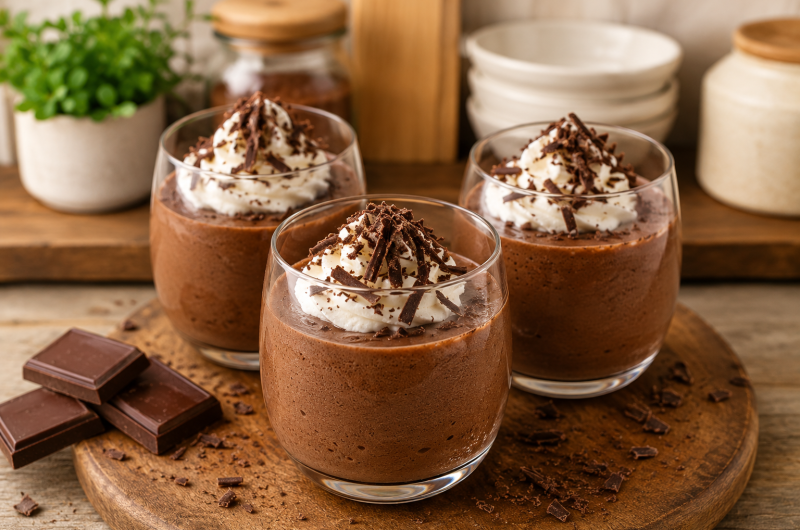
This high-protein chocolate mousse is a simple no-bake dessert made with only two ingredients: Greek yoghurt and dark chocolate. It has a rich chocolate flavor, a smooth and creamy texture, and approximately 13 grams of protein per serving. The entire recipe can be prepared within minutes, making it a convenient choice when you want an easy homemade dessert without turning on the oven.
Traditional chocolate mousse often contains eggs, cream, sugar, and several preparation steps. This easy chocolate protein mousse follows a much shorter method. Melt the dark chocolate, let it cool briefly, and then whip it into the Greek yoghurt. The mousse can be eaten immediately for a softer consistency or refrigerated until it becomes thicker and firmer.
Because the recipe does not contain eggs, it is also useful for anyone searching for an egg-free chocolate mousse. There is no need to separate eggs, whip egg whites, or cook a custard. However, this remains a dairy-based recipe because Greek yoghurt and most dark chocolate products may contain dairy, so it should not automatically be considered vegan or dairy-free.
Why This High-Protein Chocolate Mousse Works
Greek yoghurt provides a thick, creamy foundation for this healthy chocolate mousse. Its mild tanginess balances the richness of the dark chocolate, preventing the dessert from tasting excessively heavy. The protein in the yoghurt also gives the mousse more nutritional value than many conventional desserts that mainly contain cream, chocolate, butter, and sugar.
Dark chocolate provides flavor, color, sweetness, and structure. Once melted chocolate is mixed with the yoghurt, it begins to firm as it cools. This natural setting process gives the dessert a thicker, mousse-like consistency without requiring gelatin, whipped cream, eggs, cornstarch, or another thickening ingredient.
Using only two ingredients also makes the recipe easy to understand and repeat. There are fewer measurements, fewer bowls, and fewer opportunities for mistakes. Even so, the temperature of the ingredients matters. The chocolate should be melted gently and allowed to cool briefly before it is combined with the yoghurt.
A Simple Two-Ingredient Chocolate Dessert
Two-ingredient dessert recipes are valuable when time and ingredients are limited. This protein chocolate mousse needs only 400 grams of Greek yoghurt and 150 grams of dark chocolate. Both ingredients perform several functions, allowing the recipe to remain short without producing a plain or incomplete dessert.
The Greek yoghurt supplies creaminess, moisture, body, and protein. Dark chocolate brings cocoa flavor, sweetness, fat, and the firmness needed for the mousse to set. When these ingredients are whipped together, the result is smoother and lighter than eating melted chocolate alone, while still maintaining a deep and satisfying chocolate taste.
Although optional toppings may be added when serving, they are not necessary for the basic recipe. Fresh fruit or grated chocolate can improve the presentation, but they are intentionally excluded from the ingredient list because the original mousse requires only yoghurt and chocolate.
Choosing the Best Greek Yoghurt
A thick Greek yoghurt is the most suitable choice for this recipe. Its strained consistency helps create a stable mousse that does not become watery. Full-fat Greek yoghurt produces the richest and creamiest result because its natural fat softens the strong flavor of dark chocolate and contributes to a smooth mouthfeel.
Low-fat or zero-fat Greek yoghurt may also be used according to the original recipe. These options can reduce the overall fat and calorie content, but the mousse may taste slightly tangier and feel less creamy. The exact texture will depend on how thick the chosen yoghurt is and how much liquid it contains.
Regular yoghurt is generally thinner than Greek yoghurt and may not produce the same mousse-like consistency. For the intended result, choose a product clearly labelled Greek yoghurt rather than Greek-style drinking yoghurt or ordinary plain yoghurt. A thick product will combine more evenly with the melted chocolate and firm more successfully in the refrigerator.
Selecting the Right Dark Chocolate
The cocoa percentage of the dark chocolate affects both the sweetness and intensity of the finished mousse. A lower cocoa percentage generally creates a sweeter, milder chocolate flavor, while a higher percentage produces a darker and more bitter result. The source recipe uses 54% dark chocolate for a balanced and slightly sweeter mousse.
Use a dark chocolate that you already enjoy eating because its flavor will remain noticeable in such a simple recipe. There are no extra sweeteners, vanilla, or cocoa powder to adjust the taste. If the chocolate is extremely bitter, the finished dessert will also have a stronger bitterness.
For a gluten-free chocolate mousse, examine the label carefully. Although plain chocolate does not naturally require wheat, some products may contain gluten-containing ingredients or carry cross-contact warnings. Anyone with coeliac disease should use chocolate that is clearly identified as gluten-free and suitable for their dietary requirements.
Is This Chocolate Mousse Gluten-Free?
The basic combination of Greek yoghurt and dark chocolate can be gluten-free, but the safety of the finished recipe depends on the packaged products used. Greek yoghurt is usually gluten-free, although labels should still be checked for additives or manufacturing information. Dark chocolate requires particular attention because cross-contact warnings differ between brands.
When preparing this dessert for someone with coeliac disease, use clean bowls, utensils, and work surfaces. Avoid equipment that has recently held flour or gluten-containing ingredients unless it has been cleaned thoroughly. Careful ingredient selection and preparation can make this a practical gluten-free dessert for many occasions.
Do not assume that every chocolate bar is automatically coeliac-safe simply because wheat is not obvious in the main ingredient list. Look for clear gluten-free labelling or follow the dietary guidance appropriate for the person who will eat the dessert.
An Egg-Free Alternative to Traditional Mousse
Many traditional chocolate mousse recipes rely on raw or cooked eggs to create structure and airiness. This version contains no eggs, making the method simpler and removing concerns about separating eggs, cooking them correctly, or handling raw egg mixtures.
The texture is not identical to a classic French mousse because it does not contain whipped egg whites or whipped cream. Instead, it has a thick, creamy texture similar to a whipped chocolate yoghurt dessert. Refrigeration helps it become firmer, but it remains pleasantly smooth rather than airy or foamy.
This distinction is important when setting expectations. The recipe offers the flavor and creamy experience of chocolate mousse through a quicker, higher-protein method. It is particularly suitable when convenience and straightforward preparation are more important than reproducing the exact texture of a traditional mousse.
How to Melt Chocolate Safely
The dark chocolate is melted using a bowl placed over a pan of hot water. Break the chocolate into smaller pieces first so it melts evenly. The water should be hot but not boiling vigorously, and the bottom of the bowl should not touch the water.
Stir the chocolate occasionally until every piece has melted and the mixture looks smooth. Keep water and steam away from the chocolate because even a small amount of moisture may cause it to become thick, grainy, or seized.
Remove the bowl from the heat as soon as the chocolate is fully melted. Excessive heating can burn chocolate or make it difficult to combine with the yoghurt. Allow it to stand for a couple of minutes so it cools slightly without beginning to set.
Why the Melted Chocolate Must Cool
Pouring extremely hot chocolate directly into cold Greek yoghurt can create an uneven texture. The sudden temperature difference may cause the chocolate to firm too quickly, leaving small hard pieces throughout the mousse instead of blending smoothly.
Let the melted chocolate cool for approximately two minutes before mixing. It should remain fluid and easy to pour, but it should no longer be intensely hot. Avoid leaving it for too long because chocolate begins to thicken as it cools and may become difficult to incorporate.
Having the yoghurt measured and ready before melting the chocolate helps the process move smoothly. Once the chocolate has cooled slightly, pour it into the yoghurt and begin whisking without unnecessary delay.
Whipping the Chocolate and Yoghurt
Place the Greek yoghurt in a large mixing bowl and pour in the slightly cooled melted chocolate. Use an electric whisk to combine them for approximately one minute. Whipping distributes the chocolate evenly and gives the mixture a smoother and somewhat lighter consistency.
Begin at a lower speed if necessary to prevent the yoghurt from splashing out of the bowl. Increase the speed once the ingredients start coming together. Stop when the mousse looks uniform and no pale streaks of yoghurt or dark streaks of chocolate remain.
Avoid prolonged whipping after the ingredients are fully blended. Excessive mixing is unnecessary and may warm the mousse. One minute should be enough when the chocolate is fluid and the yoghurt has a smooth consistency.
Serving the Mousse Immediately
The high-protein chocolate mousse can be eaten immediately after mixing. At this stage, it will have a softer and creamier consistency, similar to a thick chocolate yoghurt. Divide it evenly among four serving bowls or glasses and serve with a spoon.
Immediate serving is useful when you need a quick dessert and do not want to wait for refrigeration. The chocolate flavor will already be fully present, although the mixture will not be as firm as it becomes after chilling.
If presentation is important, spoon or pipe the mixture carefully into small dessert glasses. Clean the rims before serving. Optional fresh fruit or grated chocolate may be added, but these additions are not part of the original two-ingredient recipe or its nutritional calculation.
Chilling for a Thicker Texture
Refrigerating the mousse allows the melted chocolate to firm and creates a thicker consistency. The exact chilling time is flexible because the original recipe allows the dessert to be served immediately or refrigerated according to personal preference.
Cover the serving dishes before placing them in the refrigerator. This protects the mousse from absorbing odors and prevents its surface from drying. Smaller portions will usually cool and thicken more quickly than one large container.
The mousse will continue to become firmer the longer it remains cold. If it feels too firm after extended refrigeration, let it rest briefly at room temperature before serving. Do not heat it because warmth will melt the chocolate and loosen the texture.
Why This Dessert Is Higher in Protein
Greek yoghurt naturally contains more protein than many ordinary yoghurts because some of the liquid whey is removed during production. In this recipe, 400 grams of Greek yoghurt are divided among four servings, providing a meaningful amount of protein in each portion.
According to the supplied nutritional information, every serving contains approximately 13 grams of protein. The exact amount may change depending on the yoghurt and chocolate brands used, particularly when choosing between full-fat, low-fat, or zero-fat Greek yoghurt.
The protein makes this mousse more substantial than many desserts, but it should still be considered a sweet treat. Dark chocolate contributes fat and carbohydrates, so serving size remains important when following a particular nutrition plan.
Flavor and Texture Expectations
The finished mousse has a deep chocolate flavor balanced by the mild tang of Greek yoghurt. Using 54% dark chocolate creates a moderately sweet dessert, while chocolate with a higher cocoa percentage will taste more intense and less sweet.
Its texture is smooth, thick, and creamy rather than extremely light and airy. Full-fat Greek yoghurt gives the richest consistency. Low-fat yoghurt creates a lighter result, but the mousse may feel slightly less luxurious and have a more noticeable yoghurt flavor.
Because only two ingredients are used, their quality has a strong influence on the outcome. Choose a thick Greek yoghurt and a dark chocolate whose flavor you enjoy. Good ingredients allow the simple method to produce a satisfying dessert without extra sugar or flavorings.
Optional Serving Ideas
Fresh berries can provide color and a tart contrast to the chocolate mousse. Strawberries, raspberries, or blueberries work particularly well. A small amount of grated dark chocolate can emphasize the chocolate flavor and create a more finished appearance.
These toppings should be treated as optional additions rather than part of the original recipe. They change the total calories, carbohydrates, protein, and fat, so the supplied nutritional information applies only to the Greek yoghurt and dark chocolate.
For a clean presentation, divide the mousse into four equal glasses and chill them until serving. Add fresh fruit immediately before bringing the dessert to the table. This keeps the fruit fresh and prevents its juice from changing the mousse’s surface.
Preparing the Mousse in Advance
This chocolate protein mousse can be made ahead and refrigerated in covered serving dishes. Preparing individual portions in advance makes it convenient for dinner parties, family meals, or planned snacks.
The mousse becomes firmer during refrigeration because the dark chocolate sets. If it has been stored for several hours, remove it from the refrigerator shortly before serving to soften the texture slightly.
Because the recipe contains fresh dairy, keep it refrigerated until needed. Do not leave it at room temperature for an extended period. Use clean containers with secure covers to maintain its flavor and texture.
Can Protein Chocolate Mousse Be Frozen?
Freezing is not the best storage method for this recipe. Greek yoghurt can separate or develop an icy and grainy texture after freezing and thawing. The combination may no longer have the same smooth mousse consistency.
For the best quality, prepare only the amount needed and keep it covered in the refrigerator. The recipe makes four portions, so it is already suitable for a small household or gathering.
If the mousse has been frozen accidentally, thaw it in the refrigerator rather than at room temperature. It may require stirring, but the original creamy consistency cannot be guaranteed.
Important Notes for Reliable Results
Use thick Greek yoghurt rather than thin regular yoghurt. Choose a chocolate with a cocoa percentage that matches your preferred sweetness, and check the label carefully when preparing a gluten-free or coeliac-safe dessert.
Melt the chocolate gently over hot water, keeping water and steam out of the bowl. Allow it to cool briefly, but mix it into the yoghurt while it is still fluid.
Whip the ingredients for approximately one minute, stopping once the mousse is completely smooth and evenly colored. Serve immediately for a softer texture or refrigerate it for a firmer consistency.
Why This Recipe Is Worth Making
This easy high-protein chocolate mousse offers a useful combination of simplicity, flavor, and convenience. It requires only two ingredients, no oven, no eggs, and no complicated preparation. The complete active process takes only a few minutes.
Greek yoghurt gives the dessert a thick and creamy foundation while contributing protein. Dark chocolate provides richness and enough structure to help the mousse firm during refrigeration. Together, they create a quick chocolate dessert that feels satisfying without requiring heavy cream or a long list of ingredients.
For anyone looking for a two-ingredient chocolate mousse, an egg-free dessert, a no-bake chocolate recipe, or a high-protein sweet treat, this recipe is an easy option that can be prepared whenever a chocolate craving appears.
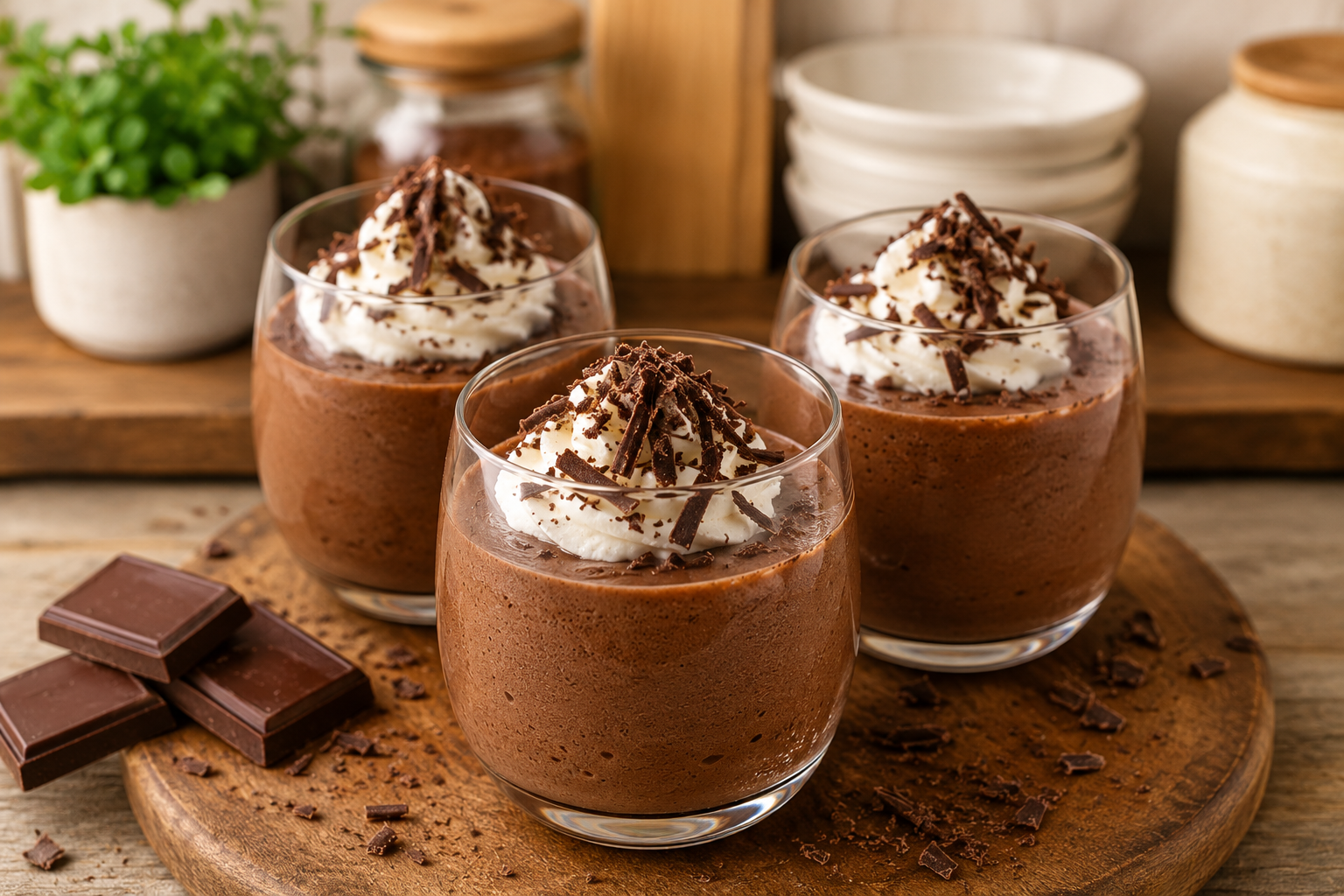
High Protein Chocolate Mousse Recipe
A smooth, egg-free chocolate mousse made with thick Greek yoghurt and dark chocolate. This easy two-ingredient dessert requires no baking and provides approximately 13 grams of protein per serving.
4
servings20
minutes300
kcal20
minutesIngredients
400 g Greek yoghurt
150 g dark chocolate
Directions
- Break the chocolate into a heatproof bowl.
- Place the bowl over a pan of hot, non-boiling water.
- Stir until melted, then cool for 2 minutes.
- Put the Greek yoghurt in a mixing bowl.
- Pour in the cooled melted chocolate.
- Whisk electrically for 1 minute until smooth.
- Divide between four serving dishes.
- Serve immediately or refrigerate until thicker.
Nutrition Facts
- Calories: 300kcal
- Fat: 18g
- Carbohydrates: 21g
- Protein: 13g