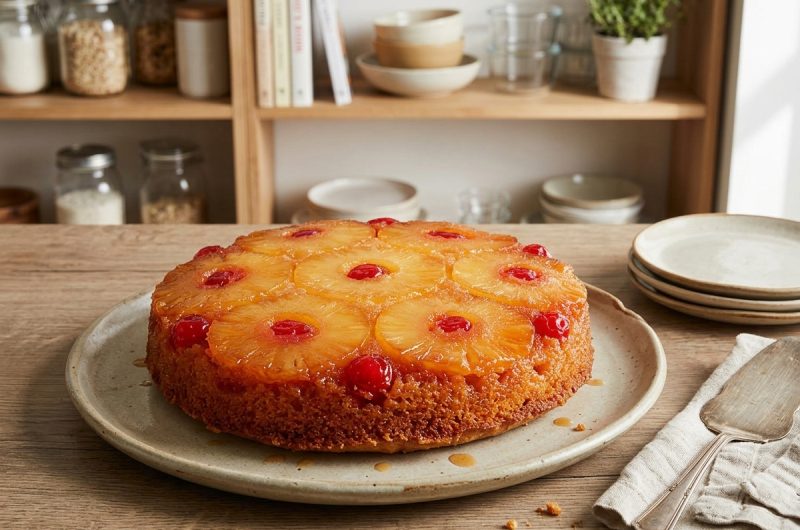
Gluten-Free Pineapple Upside Down Cake is a beautiful old-fashioned dessert made with a soft butter cake, caramelized brown sugar, sweet pineapple slices, and bright maraschino cherries.
The fruit is arranged underneath the cake batter before baking, then everything is carefully turned out onto a serving plate so the glossy pineapple and cherry topping becomes the star of the finished cake. It is an easy gluten-free dessert that looks impressive without requiring complicated decorating skills.
Why This Gluten-Free Cake Works So Well
This cake has the familiar flavor of a traditional pineapple upside-down cake while using gluten-free all-purpose flour. The cake itself is buttery, lightly sweet, and soft enough to complement the juicy fruit topping without becoming overwhelmed by it.
Because the pineapple and brown sugar release moisture during baking, the cake is made slightly denser than a typical butter cake. That texture helps it support the generous fruit topping while still giving each slice a tender bite.
The Pineapple and Brown Sugar Topping
The topping begins with melted butter spread across the bottom of the cake pan, followed by an even layer of packed brown sugar. As the cake bakes, the butter and brown sugar combine with the natural juices from the pineapple to create a rich, glossy glaze. The pineapple slices sit directly over this mixture, allowing their edges to become beautifully caramelized while the sugar mixture adds a deep, buttery sweetness to every slice.
Choosing the Right Pineapple
Canned pineapple makes this recipe particularly convenient because the slices are already prepared and have a consistent size and shape. Drain the pineapple thoroughly before arranging it in the pan, and blot away extra liquid with a paper towel. Removing excess moisture is important because too much pineapple juice can make the bottom of the cake overly wet. Fresh pineapple can also be used, but canned pineapple is simple, reliable, and works especially well for this classic dessert.
The Role of Maraschino Cherries
Maraschino cherries give the cake its unmistakable pineapple upside-down appearance. They add a pop of color in the centers of the pineapple rings and in the spaces between them. Their sweet fruit flavor also works nicely with the buttery brown sugar glaze. When arranging the cherries, place them carefully so they remain in position while you add the cake batter. A neat arrangement makes a noticeable difference once the cake is flipped onto the serving plate.
Choosing Gluten-Free Flour
The gluten-free flour is one of the most important ingredients in this recipe. Gluten-free flour blends can behave differently from one another, so the finished cake may vary slightly depending on the brand used. A cup-for-cup or all-purpose gluten-free flour blend containing the necessary starches and xanthan gum is suitable for this recipe. The original recipe uses a rice-flour-based gluten-free blend, but the important point is to choose a blend specifically designed to replace regular all-purpose flour.
Do Not Add Extra Xanthan Gum
The recipe calls for gluten-free all-purpose flour with xanthan gum, so additional xanthan gum should not be added. Xanthan gum helps provide structure in gluten-free baking, but using too much can produce an unpleasant gummy texture. Always check the flour package before measuring your ingredients. If the selected gluten-free flour blend already contains xanthan gum, follow the recipe as written rather than adding more.
Measuring Gluten-Free Flour Correctly
Accurate flour measurement is especially useful when making gluten-free cakes. For the most consistent result, use the spoon-and-scoop method. Spoon the flour gently into your measuring cup until it is full, then level the surface with the back of a knife. Avoid dipping the measuring cup directly into the flour bag because this can compress the flour and result in using more flour than the recipe requires. Too much flour can make the finished cake heavier and drier.
Preparing the Cake Pan
Before assembling the cake, preheat the oven to 350°F and prepare a 9-inch cake pan with gluten-free cooking spray. A coconut oil spray can be used as indicated in the original recipe. Proper preparation helps the finished cake release more easily after baking. Since the fruit and brown sugar topping becomes sticky as it bakes, making sure the pan is well coated is an important step rather than something to overlook.
Building the Fruit Layer
Once the pan is prepared, pour the melted unsalted butter into the bottom. Sprinkle the packed brown sugar evenly over the butter, making sure there are no large dry patches. Arrange the drained pineapple slices over the sugar layer, then place the maraschino cherries in the centers of the pineapple slices and in the spaces between them. This arrangement creates the decorative pattern that will appear on top when the cake is inverted.
Making the Gluten-Free Cake Batter
The cake batter starts with softened unsalted butter and granulated sugar. Beat these ingredients together until the mixture becomes fluffy. This step helps incorporate air into the batter and contributes to the cake’s final texture. Add the vanilla extract and egg, then continue mixing until the mixture is creamy. Taking a little time with this stage helps create a smooth base before the dry ingredients are incorporated.
Adding the Dry Ingredients
The gluten-free flour, gluten-free baking powder, and salt are added to the butter mixture and mixed until combined. It is important not to rush this stage, but there is also no need to overwork the batter. Once the dry ingredients are incorporated, the milk is added to create the final batter. The finished mixture is naturally thick, which is useful because it needs to sit over the pineapple and cherries without flowing too deeply between the fruit pieces.
Why the Batter Is Thick
A thick cake batter is helpful for an upside-down cake because the fruit needs to remain arranged at the bottom of the pan. If the batter were extremely thin, it could move between the pineapple slices and disturb the arrangement. The thicker consistency allows you to spread the batter evenly over the fruit with a spatula. Smooth the surface gently so the cake bakes evenly without pressing down on the pineapple layer underneath.
Baking the Cake
Place the prepared cake pan on the middle rack of the preheated oven and bake for 50 to 55 minutes. Baking time can vary slightly between ovens, so begin checking toward the end of the recommended baking period. A toothpick inserted into the center should come out clean when the cake is ready. The top should be properly baked while the brown sugar, butter, pineapple, and cherries underneath have had enough time to create their rich glaze.
Why Cooling Time Matters
After removing the cake from the oven, allow it to cool in the pan for 10 to 15 minutes. This short resting period gives the cake structure and allows the hot topping to settle slightly. However, it should not be left in the pan for an extended period because the caramelized brown sugar mixture can begin to stick as it cools. The goal is to allow the cake to firm up while keeping the topping warm enough to release.
How to Flip the Cake Successfully
Place a serving plate over the cake pan, then carefully turn the pan over so the cake releases onto the plate. Work confidently but carefully during this step. Once inverted, allow the cake to cool for another 10 minutes before slicing and serving. The result should be a golden cake topped with glossy pineapple rings and bright cherries. If a small amount of topping remains in the pan, it can be carefully spooned back over the cake.
How This Cake Should Taste
Each bite combines several textures and flavors. The cake has a buttery, tender center with a slightly denser structure than a traditional wheat-based butter cake. The pineapple provides juicy fruitiness, while the brown sugar creates a rich caramel-like sweetness. Maraschino cherries add another layer of fruity flavor and a contrasting color. Together, these elements make the dessert taste nostalgic and familiar while remaining suitable for a gluten-free menu.
A Simple Dessert for Different Occasions
This gluten-free pineapple upside-down cake works well for family dinners, weekend baking, afternoon gatherings, birthdays, and holiday dessert tables. Because the fruit creates its own decoration, you do not need frosting, piping bags, or elaborate toppings. Once the cake is inverted, it already has an attractive finished appearance. That makes it particularly useful when you want a homemade dessert that feels special but does not require advanced cake-decorating experience.
Dairy-Free Option
The recipe also provides an easy dairy-free variation. The unsalted butter can be replaced with Smart Balance as specified, while the milk can be replaced with unsweetened almond milk. When making the cake for someone who needs to avoid dairy as well as gluten, check the labels of all packaged ingredients, including the gluten-free flour, cooking spray, cherries, and baking powder, to ensure they meet the dietary requirements you are following.
Common Mistakes to Avoid
One of the easiest mistakes is failing to drain the pineapple properly. Excess liquid can affect the texture of the cake and make the topping too wet. Another common issue is using a gluten-free flour that does not behave like an all-purpose cup-for-cup blend. Adding extra xanthan gum can also create a gummy texture. Finally, flipping the cake either too early or too late can make releasing the topping more difficult, so follow the recommended cooling period carefully.
Notes for the Best Results
For the best gluten-free pineapple upside-down cake, measure the flour carefully, use softened butter for the cake batter, and make sure the pineapple is well drained. Arrange the fruit neatly before adding the batter because its placement determines the final presentation. Keep the oven temperature at 350°F and bake the cake on the middle rack. Most importantly, resist the temptation to cut the cake immediately after flipping it; a short additional cooling period helps the cake settle and makes slicing easier.
Serving Gluten-Free Pineapple Upside Down Cake
Serve the cake in slices with the pineapple and cherry topping facing upward. It can be enjoyed on its own because the brown sugar glaze provides plenty of moisture and flavor. For a more indulgent presentation, it can also be paired with a suitable accompaniment of your choice. The cake is especially appealing when served slightly warm or at room temperature, allowing the buttery cake and caramelized fruit topping to remain the focus.
Why This Recipe Belongs in Your Gluten-Free Dessert Collection
A dependable gluten-free dessert should be more than simply free from wheat; it should also have a satisfying texture and familiar flavor. This pineapple upside-down cake delivers both. It uses straightforward ingredients, requires no complicated decorating, and transforms simple pantry and fruit ingredients into an attractive dessert. The combination of gluten-free cake, brown sugar, pineapple, and cherries makes it a strong choice whenever you want a classic dessert with a gluten-free twist.
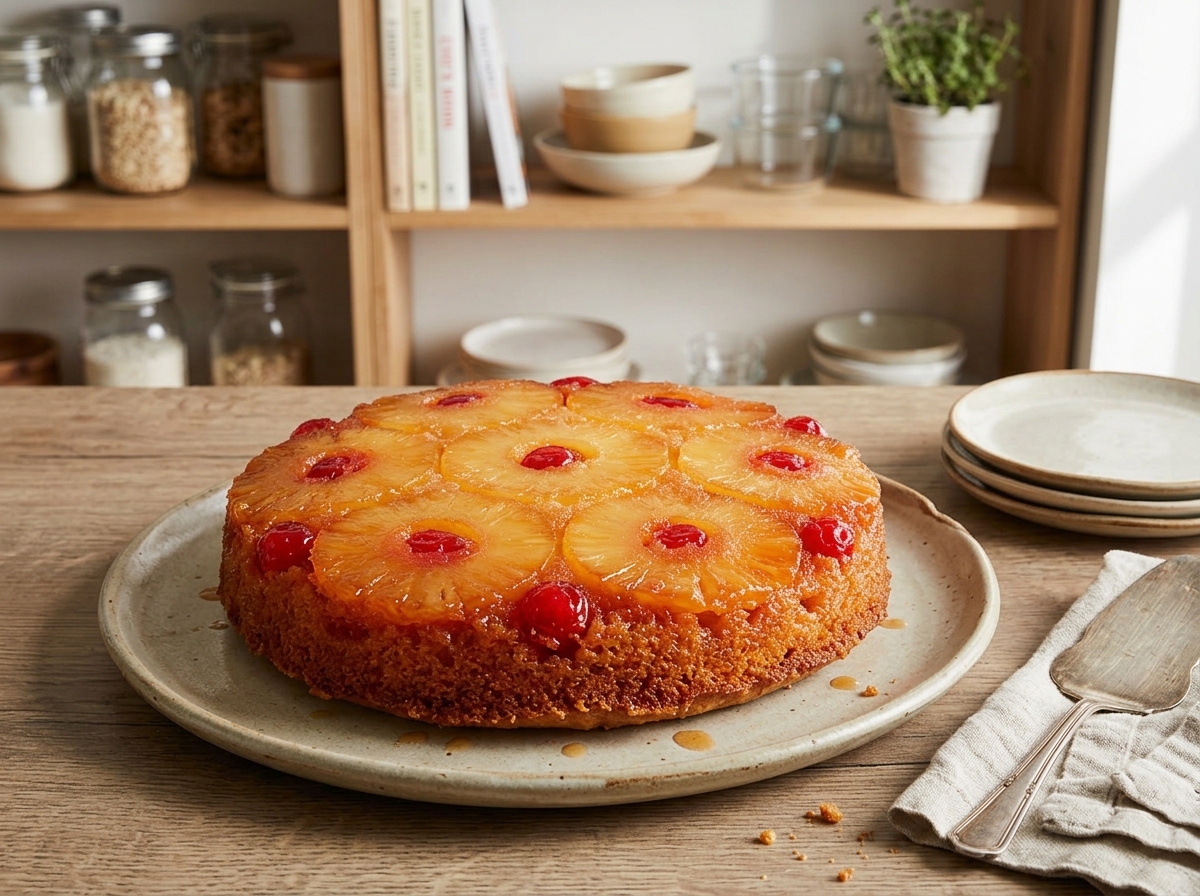
Gluten Free Pineapple Cake
A classic gluten-free pineapple upside-down cake made with a soft buttery cake, brown sugar glaze, pineapple slices, and maraschino cherries.
8
servings15
minutes50
minutes395
kcal1
hour5
minutesIngredients
- Topping
¼ cup (57 g) unsalted butter, melted; for dairy-free, use Smart Balance
⅔ cup (147 g) packed brown sugar
1 (20-oz / 398 g) can sliced pineapple, drained; about 7 pineapple slices
13 maraschino cherries
- Cake
⅓ cup (76 g) unsalted butter, softened; for dairy-free, use Smart Balance
1 cup (200 g) granulated sugar
1 teaspoon (5 ml) pure vanilla extract
1 large egg
1⅓ cups (167 g) gluten-free all-purpose flour with xanthan gum
1½ teaspoons (6 g) gluten-free baking powder
½ teaspoon (3 g) salt
1 cup (237 ml) milk; for dairy-free, use unsweetened almond milk
Directions
- Preheat the oven to 350°F.
- Spray a 9-inch cake pan with gluten-free cooking spray.
- Pour the melted butter into the bottom of the prepared cake pan.
- Sprinkle the packed brown sugar evenly over the melted butter.
- Arrange the drained pineapple slices over the brown sugar layer.
- Place the maraschino cherries in the centers of the pineapple slices and in the spaces between them.
- In a medium bowl, beat the softened butter and granulated sugar together with a mixer until fluffy.
- Add the vanilla extract and egg. Mix until the mixture becomes creamy.
- Add the gluten-free flour with xanthan gum, gluten-free baking powder, and salt. Mix until the dry ingredients are fully incorporated.
- Pour in the milk and mix until a smooth, thick cake batter forms.
- Carefully spread the batter over the pineapple and cherries. Use a spatula to smooth the surface.
- Bake on the middle rack for 50–55 minutes, or until a toothpick inserted into the center comes out clean.
- Remove the cake from the oven and let it cool in the pan for 10–15 minutes.
- Place a cake plate over the pan and carefully flip the cake onto the plate. Allow it to cool for another 10 minutes before serving.
Nutrition Facts
- Calories: 395kcal
- Fat: 16g
- Carbohydrates: 63g
- Fiber: 2g
- Sugar: 48g
- Protein: 4g