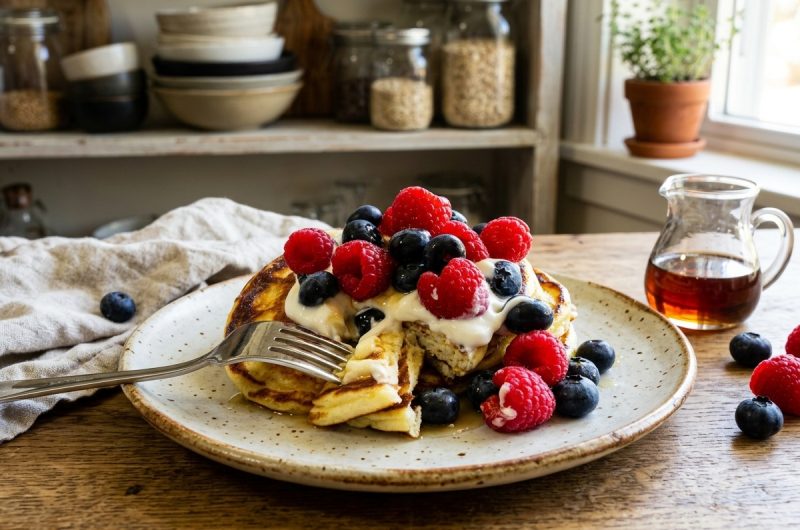
Cottage cheese pancakes are a simple way to make a breakfast that feels familiar while offering a little more protein than traditional pancakes. They cook into a thick, fluffy stack with a tender center and lightly golden edges. The cottage cheese blends into the batter, so the finished pancakes have a smooth appearance and a mild flavor that works beautifully with both classic and fresh toppings.
What makes this cottage cheese pancake recipe especially useful is that it relies on everyday ingredients rather than protein powder or complicated specialty products. Eggs and cottage cheese provide the main protein boost, while flour and baking powder create the structure needed for soft, fluffy pancakes. The result is an easy high-protein breakfast that can be prepared quickly on a busy morning or enjoyed as part of a relaxed weekend breakfast.
Why These Cottage Cheese Pancakes Are So Fluffy
The cottage cheese difference
Cottage cheese changes the texture of these pancakes in a noticeable way. When smooth cottage cheese is combined with eggs, flour, and baking powder, it adds moisture and richness to the batter. Instead of producing a dry or heavy pancake, it helps create a tender interior that stays soft after cooking. The cottage cheese itself is not overpowering, making this recipe a good choice even for people who do not usually enjoy cottage cheese on its own.
The eggs also play an important role in the final texture. They add richness and structure while helping the pancakes rise as they cook. Combined with baking powder, they contribute to the light, puffed appearance that makes these pancakes different from a thin everyday pancake. Keeping the heat controlled is equally important because the pancakes are relatively thick and need enough time for the center to cook properly.
A naturally higher-protein breakfast
If you are looking for high-protein pancakes without adding protein powder, this recipe is a practical option. Cottage cheese and eggs provide the protein while the remaining ingredients keep the recipe straightforward. According to the nutrition information supplied with the original recipe, one serving provides 23 grams of protein, making these pancakes suitable for anyone who wants a more filling breakfast without relying on supplements.
The protein content also makes these pancakes a satisfying choice for breakfast or brunch. They can be served with your favorite toppings and adjusted to suit the occasion. Fresh fruit can make the plate feel lighter, while a small amount of syrup or another favorite topping can turn the pancakes into a more traditional breakfast treat.
Ingredients You Need
Cottage cheese
Fat-free cottage cheese is used in the original recipe and is one of the most important ingredients. For the smoothest batter, cottage cheese should be blended or whisked until it becomes as smooth as possible. Smooth cottage cheese incorporates more evenly with the eggs and flour, helping the finished pancakes have a more uniform texture.
If the cottage cheese you have contains noticeable curds, blending it before preparing the batter can help. This is particularly useful if you prefer pancakes without visible pieces of cottage cheese. The cottage cheese provides moisture and protein while contributing to the soft texture of the finished pancakes.
Eggs
The eggs provide structure and richness while helping the pancakes develop their characteristic lift. Whisking the eggs thoroughly with the cottage cheese before adding the dry ingredients creates a more evenly mixed base. The eggs also help bind the ingredients together, allowing the pancakes to hold their shape when they are flipped.
Flour
All-purpose flour gives the pancakes enough structure to remain thick and tender. It combines with the moisture from the cottage cheese and eggs to create a batter that can be spooned directly into the pan. The goal is to mix the flour just until the ingredients come together rather than repeatedly whisking the batter.
Baking powder and salt
Baking powder helps the pancakes rise as they cook, while a small pinch of salt balances the overall flavor. Although the amount of salt is small, it is useful for preventing the pancakes from tasting flat. Fresh baking powder is also preferable because its leavening ability affects how much the pancakes puff in the pan.
How to Make Cottage Cheese Pancakes
Step 1: Prepare the batter
Begin by whisking the eggs and cottage cheese together in a mixing bowl. Continue until the mixture is reasonably smooth and evenly combined. This creates the wet base for the pancake batter. Once the cottage cheese and eggs are combined, add the flour, baking powder, and salt.
Whisk the dry ingredients into the wet mixture until just combined. Avoid excessive mixing because overworking flour can affect the tenderness of pancakes. The batter does not need prolonged whisking once everything is incorporated. A short mixing process is enough to bring the ingredients together and prepare the batter for cooking.
Step 2: Rest the batter
Allow the batter to rest for about 5 to 10 minutes while the pan heats. Although this step does not require much effort, it gives the flour time to hydrate and allows the batter to become more cohesive. It also makes it easier to cook consistent pancakes because the mixture settles before it reaches the pan.
While the batter rests, preheat a large nonstick frying pan over medium-low heat. This lower temperature is particularly useful for these pancakes because they are thicker than many traditional pancakes. A pan that is too hot can brown the outside quickly while leaving the center undercooked.
Step 3: Prepare the pan
Once the pan is heated, lightly coat it with olive oil spray or use a small amount of butter. The original recipe allows either option, with butter providing a richer result while cooking spray can help keep the calorie contribution lower.
Medium-low heat is the key here. Give the pan enough time to heat evenly, but avoid turning the temperature too high. Cottage cheese pancakes need a little patience because their thick texture means the inside requires time to cook while the exterior develops a golden finish.
Step 4: Cook the pancakes
Use a spoon or a large cookie scoop to portion the batter into the pan. The original recipe uses approximately three tablespoons of batter for each pancake. Allow the batter to sit in the pan rather than spreading it aggressively. This helps maintain the thickness that gives the pancakes their fluffy texture.
Cook until the surface begins to look slightly matte and air bubbles appear. This usually indicates that the first side has developed enough structure to be turned. Carefully slide a spatula underneath and flip the pancake gently. Cook the second side for another 2 to 3 minutes, or until the pancake is golden and cooked through.
Step 5: Serve immediately
Remove the finished pancakes from the pan and continue cooking the remaining batter. Stack the pancakes as they come off the pan and serve while warm. Because these pancakes have a tender interior, they are particularly enjoyable shortly after cooking when the outside is lightly golden and the center remains soft.
Serving Ideas
Classic toppings
These pancakes can be served with toppings of your choice. A traditional breakfast presentation might include a drizzle of syrup, while fresh fruit can provide a bright contrast to the warm pancakes. Because the pancakes have a mild flavor, they can work with a wide range of toppings without competing with them.
Fresh and simple options
Fresh fruit is an easy way to add color and freshness to the plate. Depending on what is available, berries or sliced fruit can be placed over the pancake stack. You can also keep the serving simple and enjoy the pancakes on their own if you prefer to focus on their soft, eggy texture.
Tips for Better Cottage Cheese Pancakes
Keep the heat moderate
One of the most important cooking details is temperature. These pancakes are thicker than many standard pancakes, so medium-low heat gives the center enough time to cook. If the pan is too hot, the outside may become dark before the middle has finished cooking.
Avoid overmixing
Once the flour, baking powder, and salt have been incorporated, stop mixing. Overmixing can make pancakes less tender. A short whisking process is enough to create a workable batter while helping maintain the soft texture you want from the finished pancakes.
Flip carefully
Cottage cheese makes the batter moist and tender, which means the pancakes can be slightly more delicate than standard pancakes. Wait until bubbles have formed and the surface looks more set before flipping. Then use a spatula to turn the pancake gently rather than moving it repeatedly in the pan.
Storing and Reheating
Refrigerator storage
Cooked cottage cheese pancakes can be stored in an airtight container in the refrigerator for up to three days. If you are stacking them, placing parchment or baking paper between the pancakes can help prevent them from sticking together.
For reheating, a toaster can help bring back some of the texture from freshly cooked pancakes. They can also be warmed in a dry pan over medium heat. Reheat only until warm rather than cooking them for an extended period, which can make the pancakes drier.
Freezer storage
These pancakes can also be frozen for longer storage. Allow the cooked pancakes to cool completely before stacking them with baking paper between each one. Place the stack in a suitable freezer bag and remove as much excess air as possible before sealing.
For convenient portions, pancakes can be divided into small stacks before freezing. When you want breakfast, they can be reheated directly from frozen in a toaster. This makes the recipe useful for meal preparation because you can cook a larger batch and save individual portions for later.
Should you refrigerate the batter?
It is better to prepare the batter shortly before cooking. Since baking powder begins working after it comes into contact with the wet ingredients, storing the mixed batter for a long period can affect how well the pancakes rise. For the best texture, prepare fresh batter and store cooked pancakes instead.
Notes for Making the Recipe
For the smoothest texture
If you want pancakes with an especially smooth interior, start with smooth cottage cheese. If your cottage cheese has large curds, blend it before combining it with the eggs. This small preparation step can make the batter more uniform and is useful for anyone who is unsure about the texture of cottage cheese.
For consistent pancakes
Using roughly three tablespoons of batter for each pancake helps create portions that cook at a similar rate. A large cookie scoop can make this easier and reduce the need to measure each pancake individually. Keeping the portions consistent also helps produce a neat stack when serving.
Give the pancakes time to cook
Resist the temptation to increase the heat simply to make breakfast faster. These pancakes benefit from slower cooking because their centers are thicker and moist. Medium-low heat allows the outside to become golden while giving the inside enough time to cook through.
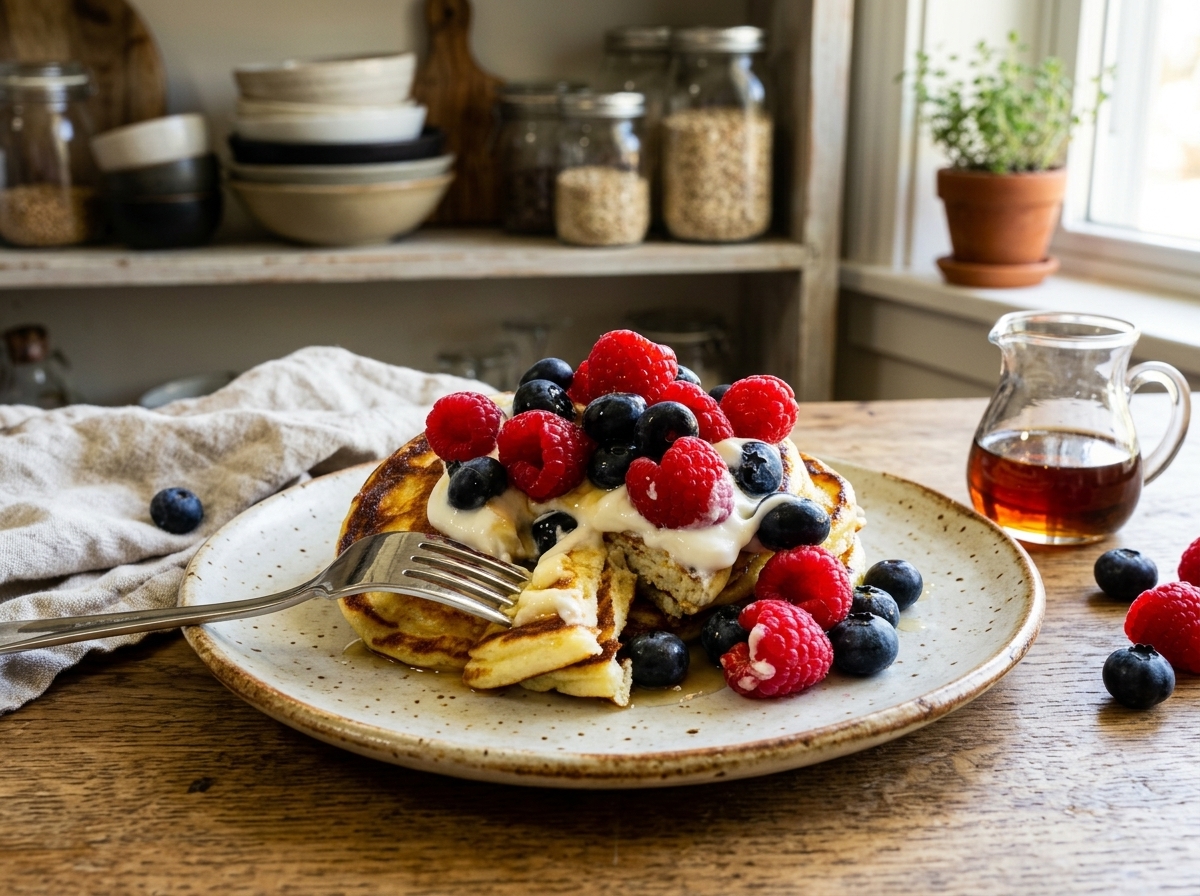
High-Protein Cottage Cheese Pancakes
Fluffy cottage cheese pancakes made with eggs, fat-free cottage cheese, flour, baking powder, and salt.
3
servings10
minutes15
minutes345
kcal25
minutesIngredients
4 eggs
1 cup fat-free cottage cheese
1¼ cups flour
1 teaspoon baking powder
Pinch of salt
Directions
- Whisk the eggs and cottage cheese together until smooth.
- Add the flour, baking powder, and salt. Whisk until just combined, taking care not to overmix.
- Let the batter rest for 5–10 minutes while preheating a large nonstick frying pan over medium-low heat. If using a stainless-steel pan or skillet, lightly coat it with nonstick cooking spray.
- Add a light spray of olive oil or use a small amount of butter. Spoon approximately 3 tablespoons of batter into the pan for each pancake.
- Cook until the surface looks slightly matte and air bubbles appear. Flip each pancake gently and cook for another 2–3 minutes on the other side.
- Remove the pancakes from the pan and serve warm with your preferred toppings.
Nutrition Facts
- Calories: 345kcal
- Fat: 6g
- Carbohydrates: 47g
- Fiber: 1g
- Sugar: 2g
- Protein: 23g