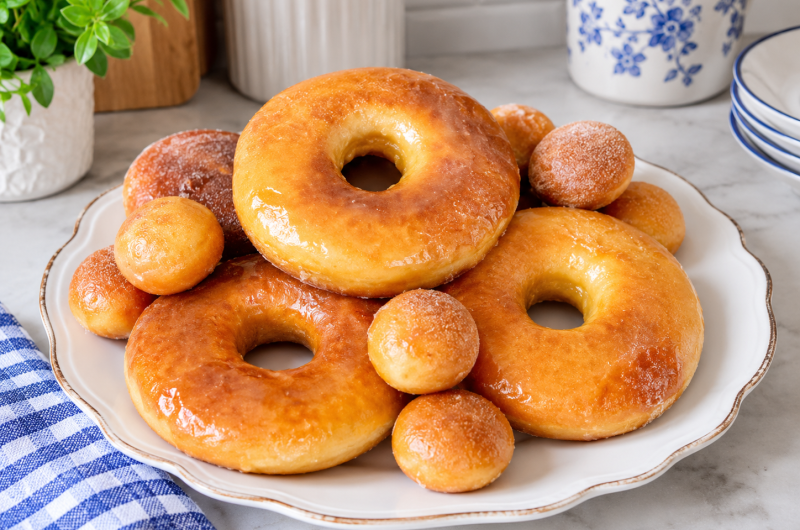
Glazed Air Fryer Donuts are a simple way to enjoy soft, fluffy homemade donuts without deep frying them in oil. These yeast-raised donuts develop a lightly golden outside while staying tender inside, then receive a smooth vanilla glaze that adds the familiar sweetness of a classic glazed donut.
Because they are prepared in an air fryer, there is no need for a pot of hot oil, making the process cleaner, easier, and more convenient for a homemade breakfast or dessert.
Why These Gluten Free Air Fryer Donuts Are Worth Making
Making gluten free donuts at home can sometimes feel challenging because gluten-free dough behaves differently from traditional wheat-based dough. The dough is generally softer and more delicate, but that does not mean the finished donuts have to be dense or dry.
With the correct amount of flour, warm milk, yeast, butter, and a little patience during proofing, these donuts become light and pleasantly fluffy. The air fryer then gives the outside a beautiful golden finish without requiring traditional deep frying.
What Makes These Donuts Different
These homemade glazed donuts combine several qualities that make them especially appealing. They are gluten free, yeast-raised, air fried, and finished with a classic vanilla glaze. Instead of relying on a deep fryer, the air fryer circulates hot air around the dough, helping the donuts cook evenly and develop a lightly crisp exterior.
The inside remains soft and tender, especially when the donuts are enjoyed while still warm. This makes them a practical option when you want bakery-style donuts without the extra work associated with frying.
The Importance of the Gluten Free Flour
Choosing the right flour is one of the most important details when making gluten free donuts. A 1:1 gluten-free flour blend is used in this recipe, and the original recipe has been tested with King Arthur Measure for Measure Gluten Free Flour. Bob’s Red Mill 1-to-1 Gluten Free Baking Blend is another option mentioned in the recipe.
These blends are designed to replace regular flour in many baking recipes, but different brands can absorb liquid differently. For that reason, it is important to pay attention to the dough’s texture instead of automatically adding large amounts of extra flour.
How the Donut Dough Should Look
The dough should be soft, slightly sticky, and tacky rather than stiff and dry. This is especially important for gluten-free yeast dough because adding too much flour can quickly turn a light donut into a heavy one. During mixing, the dough may cling slightly to the bowl, and that is not necessarily a problem.
If additional flour is required, it should be incorporated gradually, preferably a tablespoon at a time. The finished dough should remain easy enough to shape while retaining enough structure to hold the donut form.
Preparing the Dough
To begin, combine 2 1/2 cups of the gluten-free flour with granulated sugar, instant yeast, salt, warm milk, melted butter, and egg in a stand mixer fitted with a dough hook. Mix at low speed until the ingredients are incorporated. Add part of the remaining flour and continue mixing. The dough needs several minutes of mixing so the ingredients become evenly distributed and the texture begins to smooth out.
Getting the Right Dough Consistency
After the initial mixing, gradually add the remaining flour according to the recipe instructions. Continue mixing until the dough becomes smoother while still retaining a soft, slightly tacky character. Avoid treating this dough like traditional bread dough and adding flour until it becomes completely dry. Gluten-free dough often feels different from ordinary wheat-based dough, and a soft texture is important for producing tender donuts after air frying.
Shaping Homemade Gluten Free Donuts
Once the dough is ready, transfer it to a generously floured work surface. Lightly dust the top and gently work the dough until it becomes smoother and more pliable. Roll the dough into a rectangular shape, then use a round cookie cutter approximately three inches wide to cut the donuts. A smaller round cutter can be used to remove the centers. Place both the donuts and donut holes onto a parchment-lined baking sheet so they can be proofed before cooking.
Why Proofing Matters
Proofing gives the instant yeast time to work and helps create the airy texture associated with yeast-raised donuts. After shaping, the donuts should be placed somewhere warm and loosely covered with a damp cloth. Allow them to rise for approximately 25 to 35 minutes, or until they look noticeably puffy. It is important not to let them overproof. If the surface begins splitting, that can be a sign that the dough has been allowed to rise too much.
Single Rise Versus Traditional Double Rise
Traditional yeast baking often involves two separate rises, but these gluten-free donuts do not necessarily require a double rise. The original instructions explain that gluten-free dough can be allowed to rise before shaping when using regular all-purpose flour, but with gluten-free flour, a single rise after shaping can work very well. In fact, the single-rise approach can produce particularly fluffy donuts. This also simplifies the recipe and reduces the amount of waiting involved before air frying.
Preparing the Air Fryer
While the donuts are finishing their rise, preheat the air fryer to 350°F. Lightly spray the basket with non-stick spray so the donuts can be removed easily after cooking. Since air fryer models can vary in size and power, it is helpful to avoid overcrowding the basket. Giving the donuts enough room allows the hot air to circulate around them and helps them cook more evenly.
Air Frying the Donuts
Before the donuts go into the air fryer, lightly brush them with melted butter. Cook them at 350°F for approximately five minutes, or until they become golden. The short cooking time is one of the most convenient aspects of this recipe. Instead of heating a large amount of oil and carefully monitoring a deep fryer, the air fryer provides a quick cooking method with minimal cleanup. The finished donuts should be golden on the outside and tender inside.
Why Air Frying Works So Well
Air frying is especially useful for homemade donuts because it provides the cooking effect of circulating hot air without requiring the donuts to be submerged in oil. This makes the kitchen process considerably simpler. There is no bubbling oil to manage, and there is less mess afterward. The donuts still develop a lightly browned exterior, while their yeast-raised centers remain soft. For anyone who enjoys homemade donuts but does not want to deep fry, this method is an excellent alternative.
Making the Classic Vanilla Glaze
The glaze takes only a few minutes to prepare. Combine melted unsalted butter, vanilla extract, powdered sugar, and milk in a small bowl. Add the milk gradually so you can control the consistency. The glaze should be smooth enough for dipping but not so thin that it runs completely off the donuts. If it becomes too thick, a small additional amount of milk can help loosen it.
Glazing the Warm Donuts
Warm donuts are ideal for glazing because the glaze settles beautifully over their surface. Use a fork to dip each warm donut into the vanilla glaze, allowing the excess coating to drip away. Transfer the glazed donuts to a wire rack so any extra glaze can fall away instead of pooling around the base. The result is a simple, sweet coating that complements the buttery donut without overwhelming its delicate texture.
The Best Time to Eat These Donuts
These gluten-free glazed donuts are particularly enjoyable shortly after they have been glazed. Their texture is soft and fluffy when warm, and the glaze remains smooth and fresh. Gluten-free yeast baked goods can become somewhat denser as they cool, so serving them relatively soon after cooking gives you the best texture. If leftovers have cooled completely, a few seconds in the microwave can help restore some of their softness.
How to Measure Gluten Free Flour Correctly
Accurate flour measurement can make a noticeable difference in the final result. Rather than dipping a measuring cup directly into the flour container, use a spoon to transfer flour into the measuring cup and then level the top with a straight edge. This prevents the flour from becoming overly compacted. Too much flour can produce dense donuts, while the correct amount helps maintain the soft, pliable dough needed for this recipe.
Avoid Adding Too Much Flour
One of the easiest mistakes when making gluten-free donuts is adding excessive flour because the dough feels wetter than expected. Gluten-free dough is naturally different from traditional wheat dough, so it should not necessarily feel completely dry or firm. A slightly tacky consistency is desirable. If you add too much flour in an attempt to make the dough easier to handle, the finished donuts may lose the light, tender texture that makes this recipe special.
Flour the Work Surface Properly
Because the dough is soft, a well-floured work surface is essential when rolling and shaping the donuts. Sprinkle enough flour onto the surface to prevent sticking, then lightly dust the top of the dough as needed. The goal is to make the dough manageable without incorporating excessive flour into it. This small detail makes cutting the donut shapes much easier while helping preserve the soft texture of the dough.
How to Store Gluten Free Glazed Donuts
These donuts are best enjoyed fresh, but leftovers can be stored successfully. Place them in an airtight container and keep them at room temperature for a day or two. Since gluten-free baked goods can firm up as they sit, gently warming a leftover donut for a few seconds can improve its texture. Avoid overheating it, because too much microwave time can make the donut tough or rubbery.
Easy Cinnamon Sugar Variation
If you want to change the flavor without making another glaze, cinnamon sugar is an easy alternative. Instead of dipping the donuts into vanilla glaze, brush them lightly with butter and coat them with a mixture of cinnamon and sugar. The butter helps the coating adhere to the surface. This version has a warm, comforting flavor and works especially well for breakfast, brunch, or an afternoon snack.
Chocolate Topping Option
Chocolate is another simple way to change these donuts. A chocolate glaze or fudge-style topping can provide a richer finish while keeping the underlying donut recipe the same. The combination of a soft gluten-free donut and chocolate coating is especially appealing for anyone who prefers chocolate desserts over traditional vanilla glaze. You can also add a light sprinkle of decorations over the chocolate before it sets.
Maple Glazed Donuts
For a different flavor profile, the vanilla glaze can be adapted with maple flavor. Maple extract can replace the vanilla extract, or pure maple syrup can be used in place of some of the milk. The resulting glaze has a deeper, more autumn-inspired sweetness that pairs beautifully with the buttery donut. Maple is also an excellent base if you want to finish the donuts with crispy bacon.
Bacon and Maple Combination
Sweet and savory flavors work particularly well with donuts. Once the donuts are coated with maple-style glaze, a small amount of crumbled crispy bacon can be sprinkled over the top. The combination of sweet glaze, soft dough, and salty bacon creates a satisfying contrast. This variation is a fun choice for weekend breakfasts and brunch gatherings when you want something a little different from a standard glazed donut.
Donut Sundae Idea
These donuts can also be turned into a dessert-style treat by serving them with ice cream. Place a warm donut on a plate and add a scoop of your favorite ice cream, followed by whipped cream and a cherry if desired. The contrast between a warm, fluffy donut and cold, creamy ice cream makes this variation especially indulgent and suitable for parties or special occasions.
Add Sprinkles for Celebrations
Sprinkles are one of the easiest ways to make these donuts more festive. After dipping the warm donuts in the glaze, add sprinkles before the coating sets. You can choose colors that match birthdays, holidays, showers, or other celebrations. This requires no additional cooking and gives the classic glazed donuts a more playful appearance, making them suitable for both children and adults.
Notes for Better Results
For the best gluten-free air fryer donuts, focus on dough consistency, accurate flour measurement, and careful proofing. The dough should remain soft and slightly tacky rather than dry. Avoid overproofing, because excessive rising can affect the structure of the donuts. Air fry them until golden rather than relying only on the clock, since air fryer performance can differ between models. Finally, glaze the donuts while warm for the smoothest coating and best overall texture.
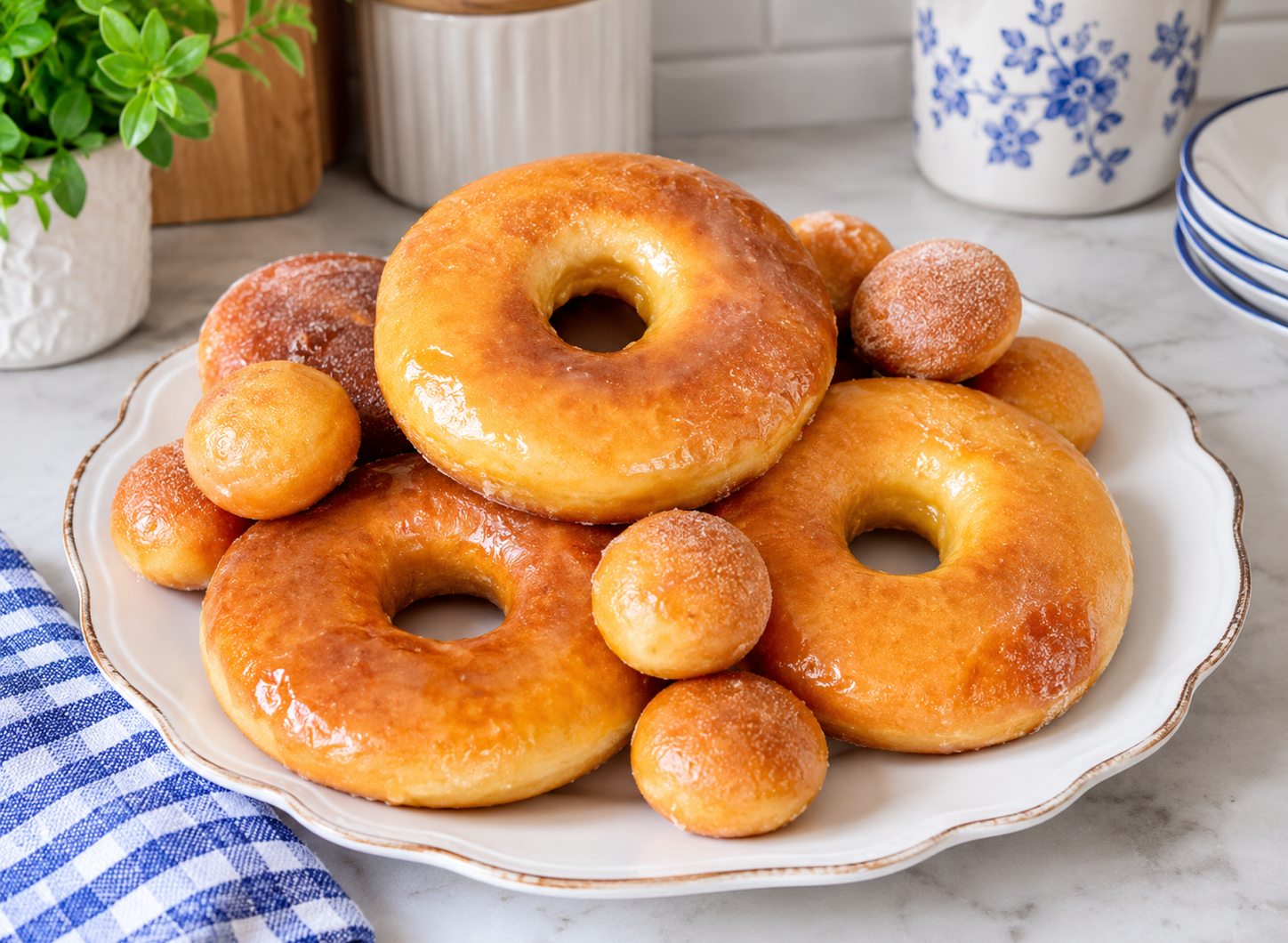
Air Fryer Glazed Donuts
Soft and fluffy gluten-free yeast donuts cooked in the air fryer and finished with a smooth vanilla glaze.
12
servings45
minutes5
minutes310
kcal90
minutes2
hours20
minutesIngredients
- For the Donuts
3 cups 1:1 gluten-free flour, divided (King Arthur Measure for Measure or Bob’s Red Mill 1-to-1)
1/3 cup granulated sugar
2 1/2 teaspoons instant dry yeast
1/4 teaspoon salt
1 cup warm milk, about 110°F
1/3 cup unsalted butter, melted
1 large egg
1 tablespoon unsalted butter, melted for brushing over donuts
- For the Glaze
1/4 cup unsalted butter, melted
1 teaspoon vanilla extract
2 cups powdered sugar
1–2 tablespoons mil
Directions
- Prepare the Donut Dough:
In a stand mixer fitted with a dough hook, combine 2 1/2 cups of the gluten-free flour, granulated sugar, instant yeast, salt, warm milk, melted butter, and egg. Mix on low speed until the ingredients are well combined. - Add 1/4 cup of the remaining flour and continue mixing for 5–7 minutes. The dough should be soft and tacky rather than dry. If necessary, add a little more flour, one tablespoon at a time, while keeping the dough soft.
- Add the remaining flour and continue mixing for another 5–7 minutes, or until the dough becomes smooth and no longer sticks heavily to the bowl.
- Shape the Donuts:
Transfer the dough to a generously floured surface. Lightly dust the top with flour and gently work the dough until it becomes smooth and pliable while remaining slightly tacky. - Roll the dough into a rectangular shape. Cut the donuts with a round cookie cutter approximately 3 inches in diameter, then use a smaller cutter to remove the centers.
- Arrange the donuts and donut holes on a parchment-lined baking sheet.
- Proof and Air Fry:
Place the baking sheet in a warm location and loosely cover the donuts with a damp cloth. Allow them to rise for approximately 25–35 minutes, or until visibly puffy. - Preheat the air fryer to 350°F and lightly spray the basket with non-stick spray.
- Brush the donuts lightly with the melted butter. Place them in the air fryer and cook for approximately 5 minutes, or until golden.
- Prepare the Glaze:
While the donuts are cooking, combine the melted butter, vanilla extract, powdered sugar, and milk in a small bowl. Add additional milk if needed to achieve a smooth dipping consistency. - Dip the warm donuts into the glaze using a fork. Place them on a wire rack and allow excess glaze to drip away.
- Serve the glazed donuts while they are still warm for the softest texture.
Notes
- Measure the gluten-free flour carefully to avoid adding too much, which can make the donuts dense.
- The dough should be soft and slightly tacky, not dry or stiff.
- Avoid overproofing the donuts. They should look puffy but should not begin to split on the surface.
- Keep the air fryer basket lightly greased so the donuts release easily.
- Air fryer cooking times can vary, so check the donuts around the 5-minute mark and cook until lightly golden.
- These donuts have the best texture when served warm and freshly glazed.
- Store leftover donuts in an airtight container at room temperature for up to 1–2 days.
- If the donuts become firm after cooling, warm them in the microwave for a few seconds before serving.
- For regular all-purpose flour, allow the dough to rise until doubled before shaping the donuts.
- For gluten-free flour, the single-rise method used in this recipe generally produces light and fluffy results.
Nutrition Facts
- Calories: 310kcal
- Fat: 12g
- Carbohydrates: 49g
- Fiber: 4g
- Sugar: 27g
- Protein: 5g