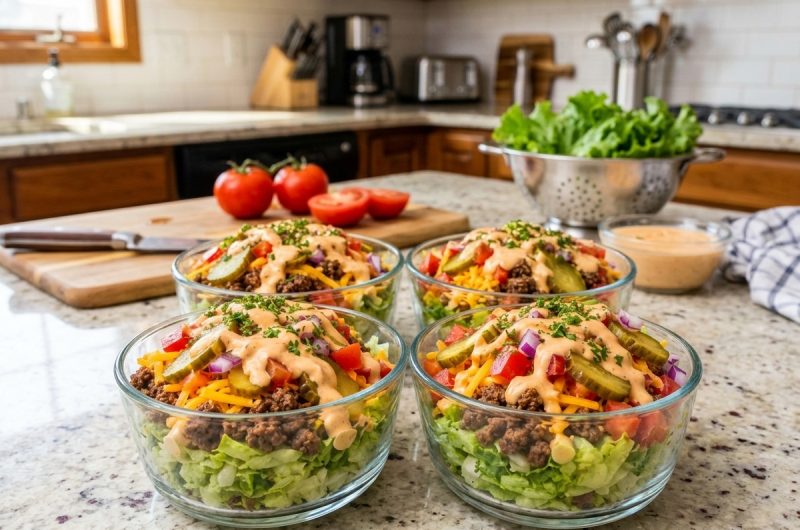
If you enjoy the classic taste of a juicy cheeseburger but want a lighter meal without traditional burger buns, this Big Mac Cheeseburger Protein Bowl is an excellent choice. It combines seasoned lean ground beef, crunchy lettuce, tangy dill pickles, fresh tomatoes, onions, shredded cheddar cheese, and a creamy homemade Big Mac-style sauce.
Every ingredient contributes to the familiar sweet, savory, tangy, and creamy flavors that make cheeseburgers so popular. Instead of serving everything inside a bun, this recipe brings the ingredients together in a fresh, colorful bowl that is both satisfying and convenient.
This healthy Big Mac burger bowl is especially appealing to people looking for low-carb lunch ideas, high-protein dinner recipes, keto-friendly meals, and easy meal-prep options. It offers the enjoyable flavors of a traditional fast-food cheeseburger while replacing the bread with fresh vegetables. The seasoned beef provides plenty of protein, the lettuce adds a refreshing crunch, and the cheddar cheese brings a rich, creamy finish. A homemade sauce made with mayonnaise or Greek yogurt, sugar-free ketchup, mustard, pickle juice, and spices completes the dish. The result is a delicious cheeseburger salad that is simple enough for everyday cooking.
One of the biggest advantages of this easy cheeseburger protein bowl is how quickly it comes together. With approximately 10 minutes of preparation and 10 minutes of cooking, you can have a complete meal ready in around 20 minutes. This makes it a practical option for busy professionals, students, families, and anyone who wants a homemade lunch or dinner without spending too much time in the kitchen. The ingredients are easy to find, the cooking process is straightforward, and the finished bowl can be assembled according to individual preferences.
What Is a Big Mac Cheeseburger Protein Bowl?
A Big Mac Cheeseburger Protein Bowl is a deconstructed cheeseburger served without a traditional bread bun. It takes the familiar ingredients associated with a classic American cheeseburger and arranges them in a bowl instead. Rather than using bread to hold the fillings together, shredded lettuce creates the base, followed by warm seasoned ground beef, cheddar cheese, tomatoes, onions, pickles, and a flavorful burger sauce.
The inspiration comes from the popular combination of beef, cheese, pickles, onions, lettuce, and tangy sauce found in classic fast-food burgers. These ingredients work particularly well together because they offer different flavors and textures in every bite. The beef provides a savory foundation, while the vegetables add freshness and crunch. Pickles introduce acidity, cheese contributes richness, and the creamy dressing brings everything together. Although the presentation is different from a traditional burger, the familiar flavor combination makes this bowl an enjoyable alternative.
Unlike an ordinary green salad, this recipe is designed to feel like a complete cheeseburger-inspired meal. The warm beef and melted cheese make it more substantial, while the crisp vegetables prevent it from becoming too rich. It is also easy to adjust the serving size and ingredient proportions to suit different appetites. Whether you want a quick lunch, a filling dinner, or a convenient high-protein meal-prep option, this burger bowl offers a practical way to enjoy classic comfort-food flavors.
This Healthy Cheeseburger Bowl
There are several reasons this low-carb cheeseburger bowl deserves a place in your regular meal rotation. First, it delivers the familiar taste of a cheeseburger without requiring a bread bun. This makes it appealing to people who prefer meals with fewer refined carbohydrates. The combination of beef, cheddar, pickles, and creamy sauce creates a satisfying burger-inspired experience, while the lettuce and fresh vegetables keep the dish light and refreshing.
Another reason to enjoy this recipe is its high-protein content. Lean ground beef is the main source of protein, providing a substantial foundation for the meal. Protein is an important nutrient that supports muscle maintenance and many normal body functions. It also contributes to feelings of fullness, which can make protein-rich meals useful when planning satisfying lunches and dinners. The recipe provides approximately 35–45 grams of protein per serving according to the supplied nutritional estimate, although the actual amount depends on the specific ingredients and quantities used.
Convenience is another major advantage. You do not need complicated cooking techniques, special equipment, or a long list of ingredients. The beef cooks in a skillet, the sauce comes together in a small mixing bowl, and the vegetables only need basic preparation. Because the ingredients can be prepared separately, this recipe also works well for weekly meal planning. You can cook the beef in advance, wash and chop the vegetables, prepare the dressing, and assemble individual portions whenever you are ready to eat.
What Makes the Flavor of This Burger Bowl So Good?
A successful burger bowl depends on more than simply placing ground beef and vegetables in a dish. The balance between temperature, seasoning, texture, and dressing is what makes this recipe enjoyable. Warm seasoned beef creates a rich, savory foundation, while cold lettuce adds a refreshing crunch. The cheddar softens against the heat of the meat, creating a creamy element that connects the different ingredients.
The tomatoes bring a mild sweetness that balances the sharper flavors of the onions and pickles. Dill pickles are particularly useful because their acidity cuts through the richness of the cheese and mayonnaise-based dressing. Meanwhile, mustard and ketchup contribute familiar burger-condiment flavors, while garlic powder, onion powder, and paprika give the sauce additional depth.
Another important factor is the contrast between creamy and crunchy textures. Without this contrast, the bowl could feel too similar to a basic ground beef salad. The crisp lettuce, juicy tomatoes, soft cheese, tender beef, and smooth dressing create variety in every bite. This combination helps make the dish feel satisfying while keeping the presentation fresh and colorful.
High-Protein Benefits of This Ground Beef Bowl
One of the main reasons people enjoy ground beef protein bowls is their ability to provide a substantial amount of protein in a convenient meal. Protein is needed for muscle growth, tissue repair, and the maintenance of normal body functions. Including protein-rich foods in lunch and dinner can also contribute to satiety, helping meals feel more substantial.
This recipe provides an estimated 35–45 grams of protein per serving, based on the nutritional information supplied with the original recipe. The exact amount can vary depending on whether beef or turkey mince is used, the specific lean percentage of the meat, the cheese brand, and whether mayonnaise or Greek yogurt is selected for the sauce.
For people who exercise regularly, a protein-rich meal can be a useful part of an overall balanced eating routine. However, this bowl is not limited to athletes or gym enthusiasts. It is also suitable for anyone who enjoys a hearty lunch or dinner made with familiar ingredients. The combination of protein, vegetables, and flavorful dressing makes it a convenient choice for everyday meals.
Is This Big Mac Bowl Suitable for a Low-Carb or Keto Diet?
This recipe is designed without a traditional burger bun, which makes it lower in carbohydrates than many conventional cheeseburger meals. Instead of using bread, the recipe relies on lettuce as its base. Beef, cheddar cheese, and the listed vegetables provide the remaining components, while the sauce adds the familiar flavor of a classic burger dressing.
The estimated carbohydrate content is approximately 6–8 grams per serving, according to the supplied nutritional information. Actual values may vary depending on the ingredients used, especially the ketchup, yogurt or mayonnaise, and portion sizes of the vegetables. People following a strict ketogenic diet should calculate the carbohydrates using the nutritional labels of their specific products rather than relying solely on a general recipe estimate.
The recipe can also be suitable for people who simply want to reduce their consumption of refined carbohydrates. Removing the bun changes the nutritional profile while preserving many of the flavors that make cheeseburgers enjoyable. It is a practical example of how a familiar comfort food can be served in a different format without requiring complicated ingredients or cooking techniques.
How to Store Leftover Cheeseburger Bowls
Proper storage helps preserve the freshness, flavor, and texture of your prepared ingredients. If you have leftovers, it is best to keep the cooked beef, fresh vegetables, and dressing in separate airtight containers whenever possible. The lettuce should remain dry, while the sauce should be stored independently to prevent the vegetables from becoming soft.
The original recipe recommends refrigerating prepared ingredients for up to 3–4 days. For food safety, refrigerate cooked beef promptly, keep the refrigerator at 40°F (4°C) or below, and follow appropriate storage guidance for each ingredient. If any food has been left at room temperature for more than two hours, it should not be saved for later consumption. Use clean utensils when portioning the ingredients to avoid introducing unwanted bacteria into the containers.
When serving leftovers, reheat the beef separately until it is thoroughly hot, then place it over freshly prepared or properly stored lettuce. Add the cheese, tomatoes, onions, pickles, and sauce after reheating. Avoid microwaving the complete assembled bowl because the lettuce and other fresh vegetables can lose their crisp texture. Keeping the components separate makes it easier to enjoy a freshly assembled meal even when the ingredients were prepared earlier.
Frequently Asked Questions About Big Mac Cheeseburger Protein Bowls
Can I Make This Big Mac Cheeseburger Bowl Ahead of Time?
Yes. This recipe is well suited to advance preparation. You can cook the ground beef, prepare the sauce, and chop the vegetables before you need to serve the meal. Store each component separately in airtight containers in the refrigerator. When it is time to eat, reheat the beef if desired, arrange the lettuce and vegetables in a bowl, and finish with cheese and dressing. Keeping the components separate helps preserve their original textures and prevents the lettuce from becoming soggy.
How Long Does This Burger Bowl Take to Prepare?
The estimated preparation time is 10 minutes, while the cooking time is approximately 10 minutes. This gives the recipe a total preparation and cooking duration of around 20 minutes. The exact time can vary depending on how quickly you prepare the vegetables and whether the beef is already portioned. Preparing the sauce while the beef cooks is a helpful way to make the process more efficient.
Can I Use Turkey Mince Instead of Beef?
Yes. Turkey mince is listed as an alternative to extra-lean beef mince in the original recipe. It provides a different flavor while maintaining the general structure of the protein bowl. Season it using the recipe instructions and ensure that it is fully cooked before serving. Keep in mind that the nutritional information may change when you use turkey instead of beef.
Is This Recipe Keto-Friendly?
The recipe is designed to be low in carbohydrates because it replaces the traditional burger bun with shredded lettuce. Its estimated carbohydrate content is approximately 6–8 grams per serving. However, exact carbohydrate values depend on the brands and quantities of the ingredients used. If you follow a strict ketogenic eating plan, check the nutritional labels of your ketchup, mayonnaise or Greek yogurt, and other ingredients before preparing the meal.
Can I Use Greek Yogurt Instead of Mayonnaise?
Yes. The recipe specifically provides light mayonnaise or Greek yogurt as options for preparing the Big Mac-style sauce. Mayonnaise creates a richer dressing, while Greek yogurt gives it a tangier taste and a different nutritional profile. Both options can be whisked together with the ketchup, mustard, pickle juice, and seasonings to create a creamy sauce.
What Type of Lettuce Works Best?
Iceberg and romaine lettuce are both suitable for this recipe. Iceberg lettuce provides a crisp, refreshing texture that closely resembles the crunch associated with a traditional burger. Romaine lettuce is another good option and has slightly firmer leaves. Choose fresh lettuce, wash it thoroughly, and dry it before shredding to maintain the best texture.
How Many Calories Are in One Serving?
The supplied recipe estimates approximately 350 calories per serving. This figure can vary depending on the fat percentage of the mince, the type of cheese, and whether light mayonnaise or Greek yogurt is used in the dressing. For a more accurate calorie count, calculate the nutritional values using the exact products and quantities included in your preparation.
Can I Eat This Bowl Cold?
Yes, you can enjoy the bowl cold if the beef has been cooked, cooled, and refrigerated safely. However, many people prefer the contrast between warm seasoned beef and cool, crisp vegetables. If you are eating it as a prepared lunch, you can either reheat the beef separately or enjoy the entire bowl chilled. Keep the dressing separate until serving for the best texture.
How Can I Keep the Lettuce Crisp During Meal Prep?
The easiest method is to wash and dry the lettuce thoroughly before storing it in an airtight container. Keep it separate from the cooked beef, tomatoes, and sauce. Avoid adding the dressing until just before eating. These steps reduce excess moisture and help the lettuce maintain its crunch for longer.
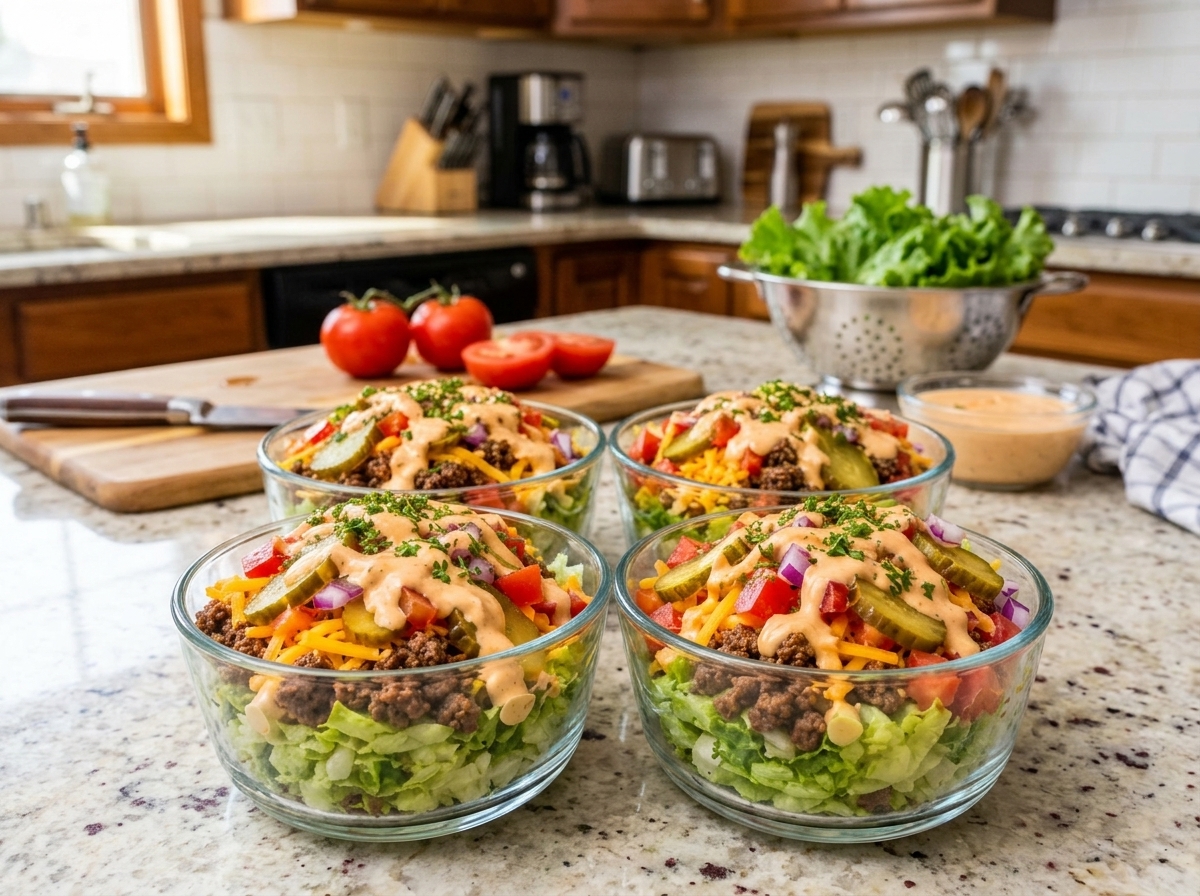
Big Mac Cheeseburger Protein Bowl – Easy, Healthy, Low-Carb Burger Bowl
Enjoy all the delicious flavors of a classic cheeseburger in this healthy Big Mac Cheeseburger Protein Bowl. Made with seasoned lean ground beef, crisp lettuce, fresh tomatoes, dill pickles, cheddar cheese, and creamy homemade Big Mac-style sauce, this easy recipe is perfect for low-carb lunches, high-protein dinners, and convenient meal prep. It delivers approximately 35–45 grams of protein per serving without the traditional burger bun.
1
servings10
minutes10
minutes370
kcal20
minutesIngredients
- For The Burger Bowl
150-170 gram 150-170 extra-lean beef mince (or turkey mince)
Salt and black pepper, to taste
1 cup 1 shredded lettuce (iceberg or romaine)
¼ cup ¼ diced tomatoes
¼ cup ¼ diced onions (optional)
Sliced dill pickles
¼ cup ¼ reduced-fat shredded cheddar cheese
- For the Big Mac-Style Sauce
2 tablespoons 2 light mayonnaise (or Greek yogurt)
1 tablespoons 1 sugar-free ketchup
1 tablespoons 1 yellow mustard
1 tablespoons 1 pickle juice
½ tablespoons ½ paprika
½ tablespoons ½ onion powder
½ tablespoons ½ garlic powder
Optional: A tiny pinch of sweetener
Directions
- Cook the Beef: Heat a non-stick skillet over medium heat. Add the extra-lean beef mince and break it into small crumbles using a spatula.
- Season and Brown: Add salt, black pepper, garlic powder, and onion powder. Cook for 6–8 minutes, stirring occasionally, until the beef is browned and fully cooked. Drain excess fat if needed.
- Prepare the Sauce: In a small bowl, whisk together light mayonnaise or Greek yogurt, sugar-free ketchup, yellow mustard, pickle juice, paprika, onion powder, and garlic powder until smooth and creamy.
- Prepare the Vegetables: Wash and dry the lettuce, then shred it. Dice the tomatoes and optional onions, and slice the dill pickles.
- Build the Bowl: Spread the shredded lettuce across the bottom of a serving bowl. Add the warm cooked beef evenly over the lettuce.
- Add Cheese and Toppings: Sprinkle shredded cheddar cheese over the warm beef. Top with diced tomatoes, onions, and sliced dill pickles.
- Finish and Serve: Drizzle the homemade Big Mac-style sauce over the ingredients. Serve immediately for the best combination of warm beef, melted cheese, and crisp vegetables.
Notes
- Use extra-lean beef mince to keep the meal lighter.
- Iceberg lettuce provides excellent crunch, while romaine is another suitable option.
- Store cooked beef, vegetables, and sauce separately in airtight containers.
- Refrigerate prepared ingredients promptly and use cooked beef within 3–4 days.
- Add the sauce just before serving to prevent the lettuce from becoming soggy.
- Reheat the beef separately before assembling your bowl.
Nutrition Facts
1 servings per container
Serving Size1 serving
- Amount Per ServingCalories370
- % Daily Value *
- Total Fat
16.3g
21%
- Saturated Fat 5.6g 25%
- Cholesterol 103mg 35%
- Sodium 1087mg 48%
- Total Carbohydrate
15.1g
6%
- Dietary Fiber 2.4g 8%
- Total Sugars 3.4g
- Protein 50g 100%
- Vitamin D 0.2mcg 1%
- Calcium 170mg 14%
- Iron 5mg 28%
- Potassium 852mg 19%
* The % Daily Value tells you how much a nutrient in a serving of food contributes to a daily diet. 2,000 calories a day is used for general nutrition advice.