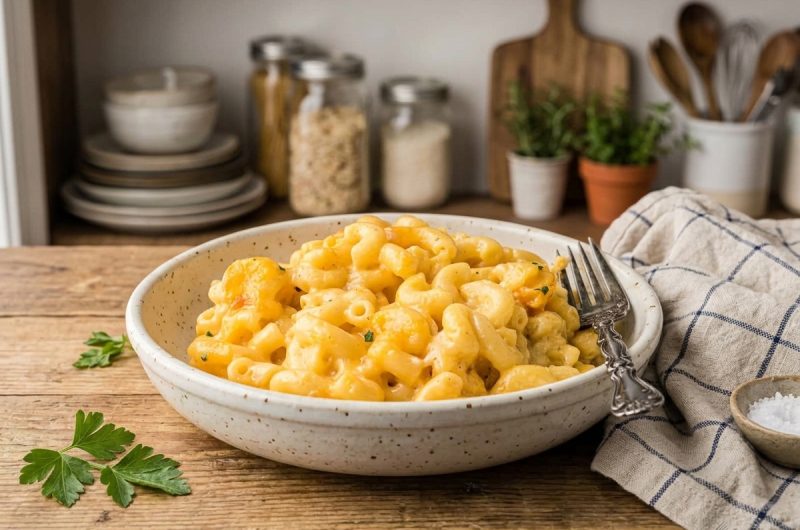
Classic Macaroni and Cheese is one of those comforting homemade meals that never goes out of style. This baked version combines tender elbow macaroni with a smooth, creamy cheddar cheese sauce and a golden, bubbling cheese topping.
Made with simple pantry ingredients, it delivers the rich flavor and satisfying texture people expect from traditional homemade mac and cheese. With only 8 ounces of pasta, this recipe makes a practical six-serving dish that works beautifully for family dinners, casual gatherings, holidays, or a comforting weeknight meal.
Why This Baked Mac and Cheese Works So Well
There is something especially satisfying about a macaroni and cheese recipe that starts with a homemade cheese sauce rather than a packaged mix. Butter and flour are cooked together to form a simple roux, while warm milk transforms that mixture into a smooth white sauce.
Extra sharp cheddar then melts into the sauce, creating the creamy, savory coating that makes every piece of pasta delicious. Baking the finished macaroni and cheese takes it one step further, creating a warm, golden surface while keeping the pasta underneath rich and creamy.
A Simple Homemade Comfort Food
This classic baked macaroni and cheese keeps the preparation straightforward without sacrificing flavor. The ingredient list is short, the cooking method is familiar, and the finished dish feels much more special than its simplicity might suggest.
Elbow macaroni is especially well suited to this recipe because its curved shape holds onto the cheese sauce, giving you plenty of creamy sauce in every bite. The extra sharp cheddar also brings a noticeable cheese flavor that balances beautifully with the mild richness of butter and milk.
What Makes the Cheese Sauce Creamy
The foundation of this homemade mac and cheese is the butter, flour, and milk mixture. Cooking the butter and flour together for a short time creates the roux that thickens the sauce. Warm milk is then gradually incorporated while whisking, helping the mixture become smooth instead of lumpy.
As the sauce cooks, it thickens gently and becomes ready for the cheddar cheese. Adding the cheese after the sauce has thickened allows it to melt into the mixture and create a creamy coating for the cooked macaroni.
Choosing the Pasta
Elbow macaroni is the traditional choice for classic macaroni and cheese, and it works particularly well because its compact shape is easy to coat with sauce. However, the cooking method can also work with other pasta shapes if you want to change the appearance of the dish.
Shapes with curves, ridges, or spaces can hold onto creamy cheese sauce nicely. If you are making this recipe exactly as written, however, elbow macaroni provides the familiar appearance and texture associated with classic American baked mac and cheese.
The Importance of Extra Sharp Cheddar
Extra sharp cheddar is responsible for much of the bold flavor in this recipe. Because the cheese has a stronger taste than mild cheddar, you do not need complicated seasonings to make the dish flavorful. Grating the cheese before adding it to the sauce also helps it melt more evenly.
For the smoothest homemade cheese sauce, grate the cheddar directly from a block rather than relying on packaged shredded cheese. Freshly grated cheese generally melts more smoothly because it does not contain the same level of anti-caking ingredients found in many pre-shredded products.
How to Make Classic Macaroni and Cheese
Cook the Macaroni
Start by cooking the 8 ounces of elbow macaroni according to the package directions. Once the pasta is tender, drain it thoroughly and set it aside. Avoid leaving the cooked pasta sitting in excess water because a watery pasta mixture can affect the consistency of the finished cheese sauce. Having the macaroni ready before preparing the sauce makes the final assembly quick and easy.
Prepare the Homemade Cheese Sauce
Preheat the oven to 400 degrees. In a large skillet, melt the butter over medium-low heat. Sprinkle in the all-purpose flour and whisk continuously until the butter and flour form a smooth mixture. Continue cooking the roux for about one minute while whisking. This short cooking period helps remove the raw flour taste while keeping the mixture ready to thicken the milk.
Warm the milk in the microwave for about 1 ½ minutes, then gradually whisk it into the butter and flour mixture. Adding the warm milk slowly while whisking helps create a smooth sauce. Increase the heat to medium and continue cooking for about five minutes, whisking regularly, until the mixture becomes slightly thickened. The sauce does not need to be extremely thick at this stage because the cheddar will add additional body.
Add the Cheese and Seasonings
Once the sauce has thickened, stir in the salt, ground black pepper, and cayenne pepper if you are using it. Add 1 cup of the grated extra sharp cheddar and mix until the cheese melts into the sauce. The result should be smooth, creamy, and rich. The cayenne is optional, but even a small amount can add a gentle background warmth without making the macaroni and cheese taste overly spicy.
Combine the Pasta and Sauce
Add the well-drained cooked elbow macaroni to the cheese sauce and stir until the pasta is evenly coated. Take your time during this step so the creamy sauce reaches all of the macaroni. Every piece should be surrounded by the cheese mixture before it goes into the baking dish. This ensures that the center of the finished casserole remains moist and creamy rather than becoming dry during baking.
Bake Until Golden and Bubbly
Transfer the macaroni and cheese mixture to a lightly greased two-quart baking dish or casserole dish. Spread it into an even layer, then sprinkle the remaining grated cheddar over the top. Place the dish in the preheated oven and bake for approximately 20 minutes, or until the cheese is melted, golden, and bubbling. The contrast between the creamy interior and lightly browned cheese topping is one of the best features of this classic baked macaroni and cheese.
How to Get a Smooth Cheese Sauce
A smooth cheese sauce depends largely on how the milk is added to the roux. Pouring all of the milk in at once can make whisking more difficult, so gradually incorporating the warm milk is a better approach. Keep whisking as the sauce cooks, particularly while it begins to thicken. If the sauce becomes thicker than you want before the cheese is added, a small amount of additional milk can help loosen it. The goal is a creamy sauce that coats the pasta without becoming stiff.
Tips for the Best Homemade Mac and Cheese
Grate the Cheese Yourself
For the best texture, grate the extra sharp cheddar from a block just before preparing the sauce. Freshly grated cheese generally melts more smoothly, helping create a creamy homemade cheese sauce. Pre-shredded cheese is convenient, but the ingredients added to prevent the shreds from sticking together can sometimes affect how smoothly the cheese melts.
Avoid Overcooking the Pasta
Cook the elbow macaroni according to the package instructions and drain it once it reaches the desired tenderness. Since the pasta will continue cooking in the oven, it does not need additional cooking before baking. Properly drained pasta also helps maintain the intended consistency of the cheese sauce.
Watch the Cheese Topping
The final layer of cheddar should become melted, golden, and bubbly during baking. If your oven browns the top very quickly, loosely covering the dish with foil for the remainder of the baking time can help prevent excessive browning. Remove the foil near the end if you want the surface to finish with a deeper golden color.
Easy Ways to Customize Macaroni and Cheese
Although this recipe is delicious as a traditional baked macaroni and cheese, the basic preparation gives you plenty of room to experiment. Blanched broccoli florets or sautéed mushrooms can add vegetables for a vegetarian variation. Cooked diced ham, pancetta, or bacon can make the dish more substantial and add savory flavor. Frozen peas or fresh blanched spinach can also be stirred into the creamy macaroni mixture before baking.
For a smoky variation, consider adding smoked paprika. A small amount of dry mustard or onion powder can also give the cheese sauce another layer of flavor. If you prefer a different cheese profile, combinations such as Gruyère, Parmesan, and sharp cheddar can create a richer and more complex result. Parmesan, asiago, or goat cheese can also be incorporated according to personal preference, while pepper jack can introduce a little more heat.
Serving Suggestions
Freshly baked macaroni and cheese can be served as either a side dish or a satisfying main course. As a side, it pairs especially well with vegetables such as green beans or a crisp garden salad, which provide a fresh contrast to the creamy cheese. It can also accompany a variety of cooked proteins when you want to build a hearty family-style dinner. For a simple meal, serve it on its own while it is still warm and bubbling from the oven.
A glass of milk is a natural pairing for this rich comfort food, especially for children. Adults may enjoy it with apple cider or another beverage of their choice. If you like extra texture, a buttery breadcrumb topping can be added before baking, although the original recipe is designed to finish with a straightforward layer of melted cheddar.
Storing Leftover Macaroni and Cheese
Refrigerator Storage
Leftover baked macaroni and cheese should be covered tightly with plastic wrap or transferred to an airtight container before refrigeration. Properly stored leftovers can be kept in the refrigerator for up to three days. When reheating, warming the macaroni and cheese gently can help preserve its creamy texture. If the sauce has thickened considerably after chilling, a small amount of milk can help restore some of its original creaminess.
Freezer Storage
This macaroni and cheese can also be frozen for up to two months. For the best results, allow frozen leftovers to thaw overnight in the refrigerator before reheating. Gradual thawing helps the dish heat more evenly and reduces the chance of the outside becoming overheated while the center remains cold. As with most creamy pasta dishes, the texture may change slightly after freezing, but careful reheating can still produce a satisfying meal.
Frequently Asked Questions
Can I Use a Different Pasta Shape?
Yes. Although elbow macaroni is the traditional choice used in this recipe, other pasta shapes can be used if desired. Cellentani, rotini, penne, and rotelle are examples of shapes that can work well because they provide plenty of surface area for the cheese sauce. If you substitute the pasta, cook the amount according to the recipe and package directions before combining it with the sauce.
What Is the Best Way to Reheat Leftovers?
Reheat refrigerated macaroni and cheese gently rather than using very high heat. Slow reheating helps protect the creamy texture of the cheese sauce. If the mixture appears thick after refrigeration, adding a little milk can help loosen the sauce. For larger portions, reheating in the oven can also work well, particularly when you want the top to become warm and lightly browned again.
Can I Make This Recipe Gluten-Free?
Yes. The original recipe uses all-purpose flour and regular elbow macaroni, but a gluten-free version can be prepared by replacing both with your preferred gluten-free flour and gluten-free pasta. Since gluten-free products can vary in texture and thickening ability, follow the package directions for the pasta and choose a flour suitable for making a roux.
Should I Use Salted or Unsalted Butter?
Either can be used, but the recipe already includes salt, so using unsalted butter gives you more control over the final seasoning. If you choose salted butter, taste the cheese sauce carefully before adding additional salt. The amount of salt in different butter brands can vary, so adjusting the seasoning to taste is the easiest way to achieve a balanced result.
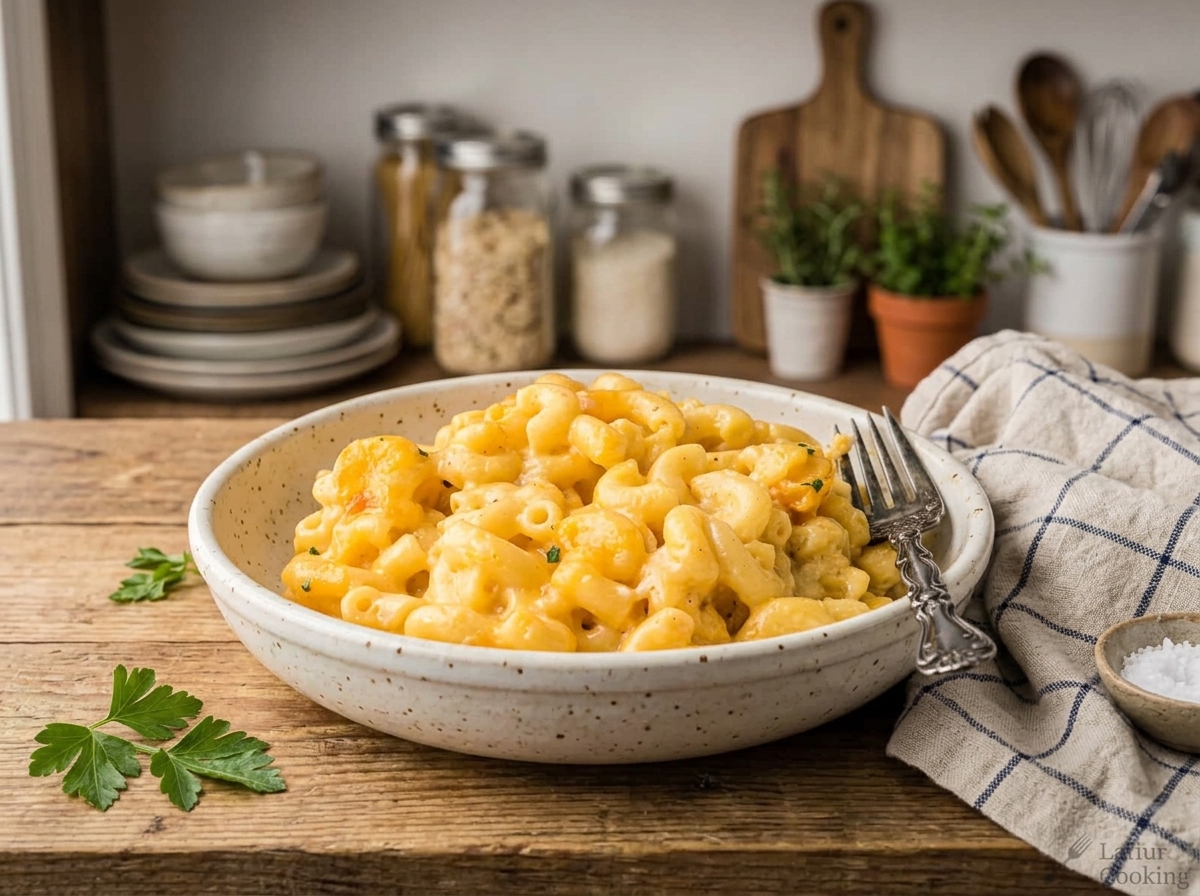
Classic Macaroni and Cheese Side Dishes Recipe
A creamy homemade macaroni and cheese made with elbow pasta, extra sharp cheddar, butter, milk, and a simple flour-based cheese sauce, then baked until golden and bubbly.
6
servings20
minutes20
minutes423
kcal40
minutesIngredients
8 ounces elbow macaroni, cooked
10 ounces extra sharp cheddar cheese, grated
2 tablespoons butter
2 tablespoons all-purpose flour
2 cups milk
½ teaspoon salt
¼ teaspoon ground black pepper
1 dash cayenne pepper, optional
Directions
- Cook the Pasta
Cook the elbow macaroni in a large pot of water according to the package directions. Drain thoroughly and set aside. - Prepare the Cheese
Grate the extra sharp cheddar cheese and keep it ready for the sauce and topping. - Preheat the Oven
Preheat the oven to 400 degrees. - Make the Roux
Melt the butter in a large skillet over medium-low heat. Sprinkle in the all-purpose flour and whisk until smooth. Continue whisking and cooking for approximately 1 minute. - Add the Milk
Warm the milk in the microwave on high for about 1 ½ minutes. Gradually whisk the warm milk into the butter and flour mixture. - Thicken the Sauce
Increase the heat to medium and cook the sauce for approximately 5 minutes, whisking regularly, until it becomes slightly thickened. - Add Seasonings and Cheese
Stir in the salt, ground black pepper, cayenne pepper if using, and 1 cup of the grated cheddar cheese. Mix until the cheese melts into the sauce. - Combine With Pasta
Add the well-drained cooked macaroni to the cheese sauce. Stir thoroughly until the pasta is evenly coated. - Assemble the Casserole
Transfer the macaroni and cheese mixture to a lightly greased two-quart baking dish or casserole dish. Spread evenly and cover the top with the remaining grated cheddar cheese. - Bake
Bake for approximately 20 minutes, or until the cheese on top is melted, golden, and bubbly.
Notes
- Refrigerator: Cover tightly with plastic wrap or place in an airtight container. Refrigerate for up to 3 days.
- Freezer: Freeze for up to 2 months. Thaw overnight in the refrigerator before reheating.
- Gluten-Free Option: Use your preferred gluten-free flour and gluten-free pasta in place of the regular flour and pasta.
Nutrition Facts
- Calories: 423kcal
- Fat: 23g
- Carbohydrates: 35g
- Fiber: 1g
- Sugar: 5g
- Protein: 20g