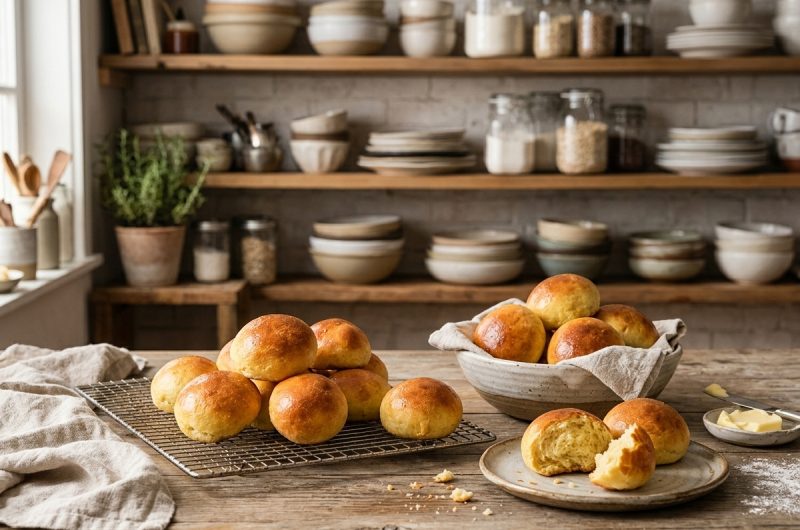
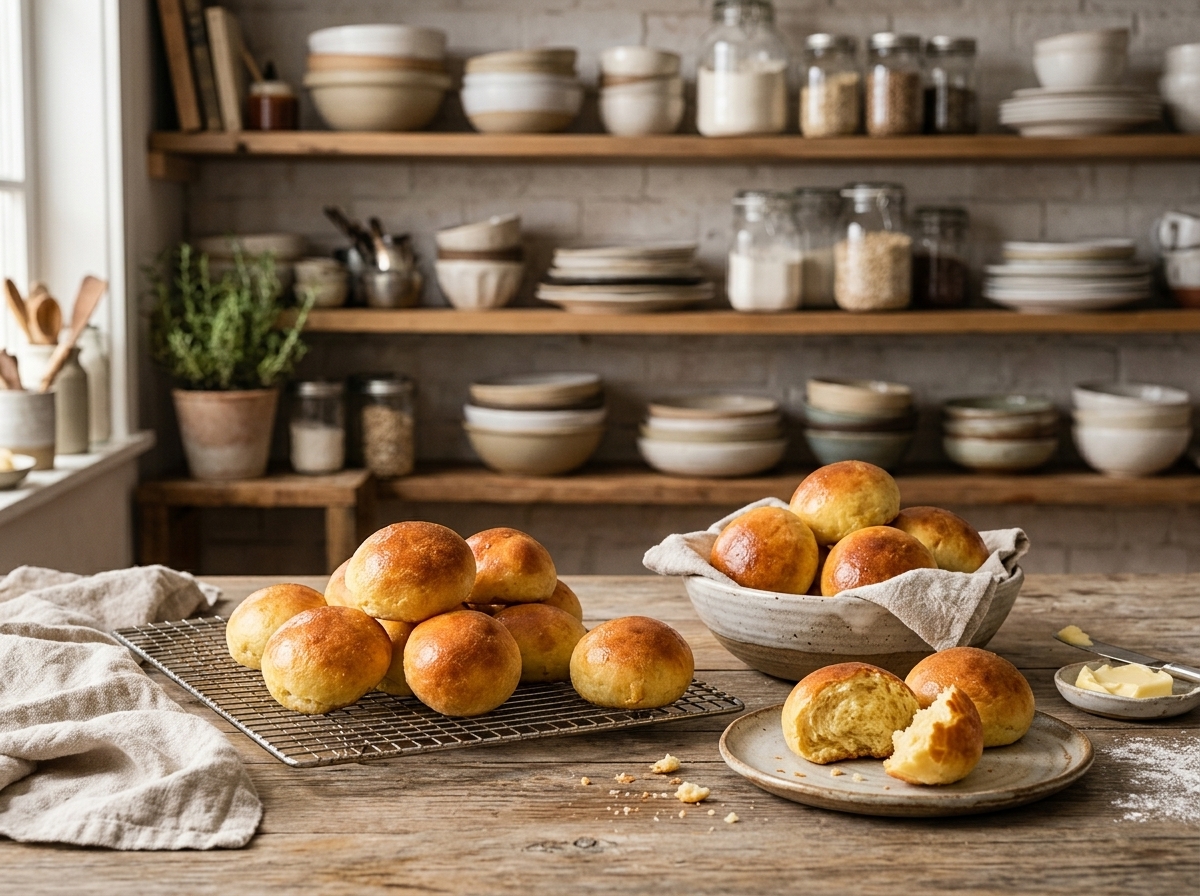
Keto bread rolls are a useful option when you want something soft and bread-like without traditional wheat flour. These fluffy low-carb rolls are made with mozzarella cheese, cream cheese, almond flour, coconut flour, eggs, and baking powder. The result is a savory roll with a tender center and lightly golden exterior. They are also gluten free and can be served on their own, alongside dinner, or sliced open for sandwiches and sliders.
Unlike conventional bread rolls made with yeast and wheat flour, these keto rolls use a variation of fathead dough to create their structure. Fathead dough is well known in low-carb cooking because melted cheese can provide elasticity and body when combined with low-carb flour and eggs. In this recipe, the dough is shaped into individual rounds before baking, giving each roll a familiar appearance while keeping the carbohydrate count relatively low.
What Makes These Keto Rolls Different?
The main difference is the combination of melted cheese and low-carb flours. Traditional bread relies heavily on wheat flour and gluten to create its structure, while this recipe uses mozzarella and cream cheese as the foundation. Almond flour contributes bulk and a mild nutty flavor, while coconut flour absorbs excess moisture and helps give the rolls a lighter texture.
These rolls are not intended to taste exactly like yeast-based bakery bread. Their flavor and texture are naturally different because the dough contains a large amount of cheese rather than wheat flour. Even so, the finished rolls are fluffy enough to enjoy as a bread substitute and firm enough to hold fillings. That makes them particularly useful for people following keto or low-carb eating plans.
Understanding Fathead Dough
Fathead dough is a popular low-carb dough made by combining melted cheese with eggs and a flour substitute. It became widely known as an alternative to traditional pizza dough and has since been adapted for many different recipes. Depending on the recipe, fathead dough can be used to make pizza crusts, breadsticks, bagels, buns, and other keto-friendly baked goods.
For these keto bread rolls, the basic idea is adapted to create a softer, more bread-like dough. Mozzarella and cream cheese are melted together first, creating a smooth cheese mixture. Eggs and the almond flour mixture are then incorporated until everything comes together. Once shaped and baked, the dough develops a lightly crisp outside while remaining soft inside.
Why Almond Flour Is Important
Super fine almond flour is one of the key ingredients in these low-carb bread rolls. Its fine texture is particularly helpful because it more closely resembles the consistency of regular flour. Coarser almond flour can sometimes create a grainier texture, which is less desirable in a soft bread recipe.
Almond flour also provides the main dry structure for the dough without introducing the amount of carbohydrates found in traditional wheat flour. Because the recipe uses a combination of almond flour and coconut flour, the two ingredients work together rather than simply replacing one another. The almond flour provides volume, while the coconut flour helps control moisture.
The Role of Coconut Flour
Coconut flour is used in a relatively small quantity, but it has an important purpose. It is highly absorbent, meaning it can soak up moisture from the melted cheese and eggs. Without enough moisture control, the dough could become overly wet and difficult to shape.
The coconut flour also contributes to the texture of the finished rolls. Because it absorbs liquid efficiently, it helps create a dough that can be divided and shaped into individual balls. It should not be treated as a direct substitute for the almond flour because the two flours behave very differently. Keeping the specified amounts helps maintain the intended consistency.
Choosing the Right Mozzarella Cheese
For the best texture, use part skim, low-moisture shredded mozzarella. This type of mozzarella melts smoothly while contributing less excess moisture than fresh mozzarella. Since the recipe already contains cream cheese, eggs, and low-carb flours, controlling moisture is important for keeping the dough manageable.
Mozzarella also provides the stretchy quality associated with fathead dough. When heated, the cheese melts and becomes soft enough to combine with the other ingredients. As the rolls bake and cool, the cheese firms again, helping give the finished bread its structure.
Why Full-Fat Cream Cheese Works Well
Full-fat cream cheese adds richness and softness to the dough. It melts together with the mozzarella to create the smooth cheese base needed for the recipe. Covering the cream cheese with the mozzarella before microwaving also helps reduce the chance of the cream cheese overheating.
The cream cheese should be fully incorporated with the mozzarella before the flour mixture and eggs are added. A smooth cheese mixture makes it much easier to achieve an even dough. Since the dough begins to firm as the cheese cools, timing is important during this stage.
Preparing the Cheese Dough
Start by preheating the oven to 350°F and lining a baking sheet with parchment paper. While the oven heats, combine the almond flour, coconut flour, and baking powder in a small bowl. Mixing the dry ingredients separately allows the baking powder to distribute more evenly throughout the dough.
Next, place the mozzarella and cream cheese in a microwave-safe bowl. Cover the cream cheese with the mozzarella, then microwave the mixture in short intervals. Stir after each interval until the cheeses have completely melted and form a smooth mixture resembling dough. Short heating intervals are important because cheese can easily overcook when exposed to too much heat at once.
Keeping the Cheese at the Right Temperature
Once the cheese mixture is melted, let it cool for a few minutes. It should remain warm and flexible but should not be extremely hot. This small step makes a major difference because the eggs will be added later. If the cheese mixture is too hot, it can begin cooking the eggs before they have a chance to blend properly.
At the same time, avoid allowing the cheese mixture to become completely cool. As melted mozzarella and cream cheese cool, they become firmer and less flexible. If the mixture hardens, incorporating the remaining ingredients becomes much more difficult. The goal is to work while the cheese is still warm enough to blend.
Combining the Dough
Add the warm cheese mixture, two eggs, and the prepared almond flour mixture to a food processor fitted with a dough blade attachment. Pulse the ingredients until the dough becomes uniform. It is normal for the finished dough to feel sticky at this stage, so there is no need to add extra flour simply because it does not resemble traditional bread dough.
A food processor makes this step quick and efficient because the melted cheese and dry ingredients can be blended evenly. The dough should come together without visible pockets of flour or separate pieces of cheese. Once the mixture is uniform, it is ready to be shaped.
Shaping the Keto Rolls
Transfer the dough to a large sheet of plastic wrap and cover it. Kneading the dough a few times while it is inside the plastic wrap helps bring it together into a more uniform ball while reducing the amount of dough sticking to your hands.
Lightly coat your hands with oil before dividing the dough into eight equal portions. Roll each portion between your palms until it becomes a smooth round ball. Arrange the dough balls on the parchment-lined baking sheet, leaving approximately two inches between them so they have room during baking.
Adding an Egg Wash
The final egg is used as an egg wash rather than being mixed into the dough. Whisk it in a small bowl and brush it generously over the surface of each shaped roll. This simple finishing step gives the baked rolls a more attractive golden color and a subtle sheen.
An egg wash is especially useful for low-carb bread because these rolls do not develop the same naturally browned crust as traditional wheat rolls. The brushed egg helps create a more appealing bakery-style finish while keeping the ingredient list simple.
Baking the Bread Rolls
Place the baking sheet on the middle rack of the preheated oven and bake the rolls for approximately 21 to 23 minutes. The exact baking time can vary slightly depending on your oven, so begin checking toward the end of the suggested range.
The rolls are ready when their surfaces are golden brown and the dough has set. Avoid opening the oven repeatedly during baking because maintaining a consistent temperature helps the rolls cook evenly. Once baked, allow them to be served while warm for the best texture.
What Are Keto Bread Rolls Like?
These rolls are soft and fluffy compared with many other low-carb bread alternatives. Their structure comes primarily from cheese, eggs, and almond flour rather than gluten. The outside becomes golden from the egg wash, while the inside remains tender.
Because mozzarella is an important part of the dough, the rolls have a subtle cheesy quality. They are savory rather than sweet, making them suitable for serving alongside soups, salads, roasted meats, eggs, or other meals. Their sturdy texture also means they can be sliced and used for sandwiches or small sliders.
How to Serve Keto Bread Rolls
There are many ways to use these low-carb rolls. Serve them warm alongside dinner as a replacement for conventional bread, or split them open and fill them with your favorite sandwich ingredients. They can also work well as small slider buns because their size makes them easy to handle.
For a simple breakfast, a warm roll can be paired with eggs or other savory foods. At lunch, it can become the base for a low-carb sandwich. At dinner, it can accompany a bowl of soup or a hearty main course. Their neutral savory profile gives you plenty of options.
Simple Topping Ideas
The basic recipe keeps the tops plain apart from the egg wash, but the rolls can be finished with additional toppings if desired. Sesame seeds can provide a classic bread-roll appearance, while everything bagel seasoning can add extra flavor and texture.
Parmesan cheese is another option for a more savory finish. You can also brush the warm rolls with melted butter immediately before serving. These additions are optional serving ideas rather than changes to the core recipe, so the rolls can remain completely plain if you prefer a simple finish.
How to Reheat Keto Bread Rolls
These rolls are best enjoyed hot because the cheese becomes firmer as it cools. When completely cool, the texture can become harder and less bread-like. Reheating helps soften the cheese again and brings back some of the tenderness present when the rolls first come out of the oven.
Leftovers can be reheated in a microwave, toaster oven, or conventional oven. Use gentle reheating rather than excessive heat, particularly in the microwave, because overheating can make cheese-based dough rubbery. Heating just until warm is generally enough to improve the texture.
Notes for Better Results
The temperature of the melted cheese is one of the most important details in this recipe. Work with the cheese while it is still warm and flexible, but give it a few minutes to cool after melting so it does not cook the eggs. The dough will naturally be sticky, and this is expected rather than a sign that something has gone wrong.
Using the specified flours also matters. Almond flour and coconut flour have different properties, so they should not be swapped for one another. Super fine almond flour gives a smoother texture, while coconut flour absorbs moisture and helps the rolls maintain their shape. Using the recommended mozzarella also helps prevent an overly wet or oily dough.
Why These Rolls Fit a Low-Carb Lifestyle
These keto bread rolls provide a way to enjoy a bread-style food while keeping the carbohydrate content lower than conventional wheat-based rolls. According to the supplied nutritional information, one roll contains 6 grams of carbohydrates and 2 grams of fiber, resulting in 4 grams of net carbohydrates.
They are also naturally gluten free based on the listed ingredients. As with any packaged ingredient, people with strict gluten-free requirements should check product labels for their specific brands. The recipe itself does not rely on wheat flour, yeast, or traditional bread flour.
Keto Bread Rolls
Fluffy keto bread rolls made with mozzarella cheese, cream cheese, almond flour, and coconut flour.
8
servings15
minutes21
minutes216
kcal36
minutesIngredients
1 1/2 cups part skim low moisture shredded mozzarella cheese
2 oz full fat cream cheese
1 1/3 cups super fine almond flour
2 tbsp coconut flour
1 1/2 tbsp aluminum free double acting baking powder
3 large eggs, with 1 egg reserved for the egg wash
Directions
- Preheat the oven to 350°F. Line a baking sheet with parchment paper.
- In a small bowl, whisk together the almond flour, coconut flour, and baking powder. Set the mixture aside.
- Place the mozzarella cheese and cream cheese in a large microwave-safe bowl. Position the mozzarella over the cream cheese to help prevent the cream cheese from overheating.
- Microwave the cheeses in 30-second intervals. Stir thoroughly after each interval until the cheeses are completely melted and form a smooth mixture resembling dough. This should take approximately 1 minute of total cooking time. The cheeses can also be melted using a double boiler.
- Let the melted cheese mixture cool for a few minutes. It should remain warm and flexible but should not be hot enough to cook the eggs. Do not allow it to cool completely and become firm.
- Add the warm cheese mixture, 2 eggs, and the almond flour mixture to a food processor fitted with a dough blade. Pulse on high speed until the dough is evenly combined. The dough will be sticky, which is normal.
- Transfer the dough to a large sheet of plastic wrap. Cover it and knead it a few times through the plastic wrap until it forms a uniform dough ball.
- Lightly coat your hands with oil. Divide the dough into 8 equal portions and roll each portion between your palms into a smooth ball.
- Arrange the dough balls on the prepared baking sheet, leaving about 2 inches between each roll.
- Crack the remaining egg into a small bowl and whisk it. Brush the egg wash generously over the surface of each roll.
- Bake on the middle rack for approximately 21–23 minutes, or until the rolls are golden brown.
- Serve the keto bread rolls while warm for the best texture.
Nutrition Facts
- Calories: 216kcal
- Fat: 16g
- Carbohydrates: 6g
- Fiber: 2g
- Sugar: 1g
- Protein: 11g