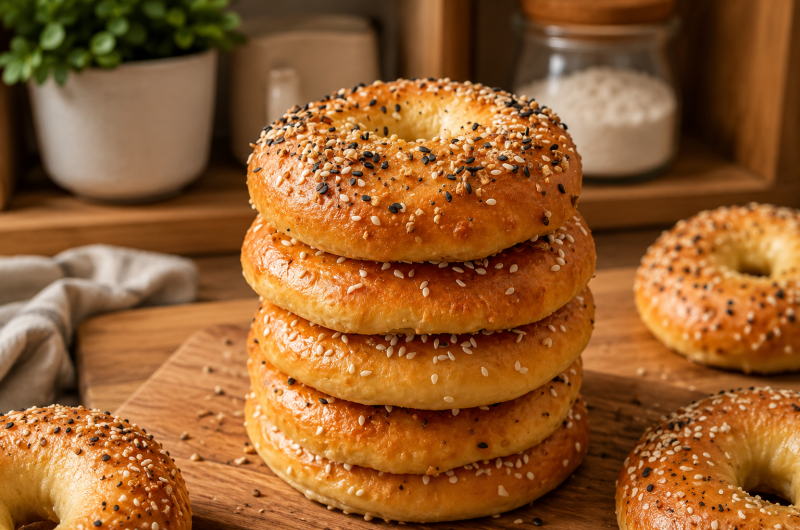
These homemade high-protein bagels are soft, satisfying, and easy to prepare with five basic ingredients. Greek yoghurt provides moisture and protein, while baking powder helps the dough rise without yeast. Each bagel contains approximately 10 grams of protein, making this recipe a convenient option for breakfast, brunch, packed lunches, or weekly meal preparation.
Unlike traditional bagels, these Greek yoghurt bagels do not require yeast, boiling, or a long rising period. The dough comes together quickly, rests briefly after shaping, and bakes directly on a parchment-lined tray. This simple method makes homemade bagels more accessible for beginners and anyone who wants fresh bread without spending several hours in the kitchen.
The recipe produces six bagels using ordinary all-purpose flour or bread flour. There is no protein powder or unusual baking ingredient. The additional protein comes naturally from Greek yoghurt, flour, and egg white. Sesame seeds or everything bagel seasoning can be added on top, allowing the finished bagels to have a classic bakery-style appearance and flavor.
Why You Will Love These High-Protein Bagels
These easy protein bagels are useful for busy mornings because they can be baked ahead and stored for several days. One batch produces six portions, making it possible to prepare most of a week’s breakfasts in a single baking session. Each bagel can be sliced, toasted, and served with a preferred sweet or savory spread.
The short preparation method is another advantage. Traditional yeast bagels normally need kneading, proofing, shaping, boiling, and baking. This recipe uses baking powder as the leavening agent, so the dough does not need a lengthy rise or a boiling-water bath. The process is closer to making quick bread while still producing the familiar round bagel shape.
The mild flavor also makes these homemade bagels versatile. Sesame seeds create a simple savory finish, while everything bagel seasoning adds onion, garlic, seeds, and salt. The bagels can be used for breakfast sandwiches, light lunches, snacks, or as a side for soup and salad.
How Greek Yoghurt Bagels Work
Greek yoghurt replaces much of the liquid and fat normally used in bread dough. Its thick consistency hydrates the flour while helping the dough remain firm enough to shape. It also contributes a mild tang that gives the finished bagels more flavor than a plain flour-and-water dough.
The protein found in Greek yoghurt raises the total protein content of each serving. Full-fat, reduced-fat, and fat-free Greek yoghurt can all work, although the taste and texture may vary. Full-fat yoghurt generally creates a richer bagel, while lower-fat versions may produce a slightly leaner texture.
Baking powder supplies the lift that yeast would normally provide. It reacts with moisture and heat, creating gas that expands during baking. The brief rest before baking allows the flour to absorb moisture and gives the baking powder time to distribute evenly throughout the dough.
Choosing All-Purpose Flour or Bread Flour
The ingredient list allows either all-purpose flour or bread flour. All-purpose flour produces a tender bagel with a softer bite, while bread flour contains more protein and may give the bagels a slightly chewier and crisper structure.
Measure the flour carefully because adding too much can make the bagels dry and dense. If possible, use a kitchen scale or gently spoon the flour into the measuring cup before leveling the top. Avoid packing it firmly into the cup.
A small amount of extra flour may be used on the work surface only if the dough is too sticky to handle. Add as little as possible because incorporating excessive flour during shaping can reduce moisture and produce a tougher result.
Why Baking Powder Replaces Yeast
Four teaspoons of baking powder act as the primary leavening agent. Baking powder works faster than yeast and does not require warm liquid, fermentation, or an extended proofing period.
The bagels will not have exactly the same fermented flavor or chewy texture as traditional yeast bagels. Instead, they offer a quick-bread style alternative with a soft interior, lightly crisp exterior, and convenient preparation process.
Whisk the baking powder thoroughly with the flour and kosher salt before adding the Greek yoghurt. Even distribution prevents some bagels from rising more than others and reduces the chance of concentrated pockets of baking powder.
The Role of Kosher Salt
One teaspoon of kosher salt balances the mild flour and yoghurt flavors. Without salt, bread can taste flat even when it is topped with seeds or seasoning.
Whisk the salt into the dry ingredients so it is distributed throughout the dough. If everything bagel seasoning is selected for the topping, remember that it may already contain a noticeable amount of salt.
The original quantity should remain unchanged when following the recipe exactly. However, the saltiness of the finished bagels will also depend on the amount and brand of topping used.
Selecting Greek Yoghurt
The recipe uses one and a half cups of Greek yoghurt. A thick yoghurt is important because a thin product may make the dough overly sticky and difficult to shape.
Full-fat Greek yoghurt generally provides the richest taste and most tender consistency. A 2% or 0% product can also be used according to the original guidance, but the result may be slightly less rich.
Use plain, unflavored Greek yoghurt. Sweetened or flavored varieties would change the taste and may contain additional liquid or sugar. Stir the yoghurt before measuring so its moisture is distributed evenly.
Mixing the Bagel Dough
Begin by whisking the flour, baking powder, and kosher salt in a large bowl. Mixing the dry ingredients first ensures that the leavening and seasoning are spread evenly.
Add the Greek yoghurt and stir with a silicone spatula or clean hands. The mixture will look crumbly at first, but it should come together as the flour absorbs moisture and the ingredients are worked gently.
Continue mixing only until a cohesive dough forms. The goal is to incorporate all dry flour without working the dough excessively. If it remains extremely dry after thorough mixing, confirm that the yoghurt was measured correctly before making any adjustment.
Handling Sticky or Crumbly Dough
The dough may initially seem too crumbly, but patience is important. Press and fold it gently in the bowl so the yoghurt reaches all the flour. It should become more unified after a short period of mixing.
If the finished dough sticks strongly to your hands or work surface, apply a light dusting of flour. Do not add large amounts because the dough may become heavy and dry during baking.
Different flour and yoghurt brands absorb moisture differently, so minor texture variations are normal. Proper dough should be soft enough to roll but firm enough to maintain a rope and ring shape.
Dividing the Dough Evenly
Turn the completed dough onto a clean work surface and divide it into six equal pieces. Even portions help the bagels bake at the same speed and provide more consistent nutritional values.
A kitchen scale gives the most accurate portions. Weigh the full dough, divide that number by six, and measure each piece accordingly. Visual division can also work if a scale is unavailable.
Keep the pieces covered loosely while shaping so their surfaces do not dry out. Work with one portion at a time and avoid adding unnecessary flour.
Shaping the Bagels
Roll each dough portion into a thick rope measuring approximately seven to eight inches. Try to maintain an even thickness from one end to the other.
Bring the ends together to form a ring and press them firmly. Place your hand through the center and roll the joined area gently against the work surface until the connection becomes smooth and secure.
Make the center opening wide enough to remain visible after baking because the dough expands in the oven. Place every shaped bagel on the parchment-lined baking sheet with space between the portions.
Resting Before Baking
Let the shaped bagels rest for five to ten minutes when possible. This short waiting period allows the flour to absorb additional moisture and may help the bagels puff more evenly.
The rest is not a yeast rise, so the bagels will not double in size. They may simply relax and appear slightly smoother before going into the oven.
Use this time to beat the egg white and prepare the chosen topping. Keeping the process organized makes it easier to coat all six bagels and move them into the oven promptly.
Using an Egg White Wash
The lightly beaten egg white is brushed over the surface of each shaped bagel. It helps create a shinier, more attractive crust and provides a sticky surface for the sesame seeds or everything bagel seasoning.
Apply a thin, even coating with a pastry brush. Heavy pools of egg white may collect around the bottom and cook onto the parchment paper.
The egg white also contributes a small amount of protein. Coat the top and exposed sides, taking care not to pull apart the joined section of the dough.
Adding the Topping
The recipe allows sesame seeds or everything bagel seasoning. Sprinkle the selected topping immediately after applying the egg white so it adheres before the surface begins to dry.
Sesame seeds provide a mild nutty flavor and a classic bagel appearance. Everything bagel seasoning usually contains a combination of sesame seeds, poppy seeds, dried garlic, dried onion, and salt.
Apply enough topping for flavor and appearance without creating a heavy layer that falls off after baking. Gently press the seasoning onto the egg-washed surface if necessary.
Baking the Protein Bagels
Position an oven rack in the center and preheat the oven to 350°F before mixing the dough. Line a baking sheet with parchment paper to prevent sticking and simplify cleanup.
Bake the bagels for approximately 20 to 25 minutes. They should rise, become lightly fluffy, and develop an evenly golden surface.
Begin checking near the 20-minute mark. Oven temperatures vary, so some batches may require the complete 25 minutes. The bagels should feel set rather than soft and doughy when gently touched.
Cooling Before Slicing
Transfer the baked bagels to a wire rack and allow them to cool for at least ten minutes. Cooling gives the interior time to finish setting and prevents the dough from becoming compressed when sliced.
A freshly baked bagel may feel tempting to cut immediately, but slicing too early can release steam and leave the center gummy. The short cooling period improves both texture and cutting quality.
Once cooled, the bagels may be sliced and eaten as they are or toasted for a crisper surface. Use a serrated bread knife and cut carefully through the center.
Serving Ideas
These high-protein breakfast bagels can be served with cream cheese, eggs, vegetables, smoked salmon, nut butter, or another preferred topping. Additional ingredients are serving suggestions and are not included in the original recipe or nutritional values.
For a higher-protein breakfast, pair one bagel with eggs, egg whites, Greek yoghurt, cottage cheese, or another protein source. The finished nutritional total will depend on the serving choice.
The bagels can also be used for sandwiches. Their mild flavor works with both breakfast fillings and lunch ingredients, making them useful beyond the morning meal.
Meal Preparation and Storage
Allow the bagels to cool completely before storing them. Warm bagels release steam inside a container, which can create excess moisture and soften the exterior.
Place the cooled bagels in an airtight container and keep them for up to four days. Store them according to the temperature and conditions of your kitchen, using refrigeration when necessary for longer freshness.
For convenient meal preparation, slice the bagels after cooling and store them ready for toasting. This saves time during busy mornings and allows each portion to be reheated as needed.
Reheating and Toasting
A cooled bagel can be sliced and toasted until the cut surfaces become lightly crisp. Toasting improves the texture of stored bagels and warms the interior.
A toaster, toaster oven, oven, or air fryer may be used if suitable for the bagel size. Watch carefully because high-protein baked goods can dry out if reheated too long.
Add spreads or sandwich fillings after warming. If using a cold topping, let the bagel cool briefly so the topping does not melt or slide off.
Common Problems and Solutions
Dry or dense bagels usually result from too much flour or excessive baking. Measure carefully, use only a light dusting on the work surface, and begin checking the oven at 20 minutes.
Bagels that spread may contain yoghurt that is too thin or dough that is overly wet. Thick Greek yoghurt provides the most dependable consistency.
If the joined ends separate, press them more firmly and roll the seam gently on the work surface. A secure connection helps the bagel maintain its ring shape during baking.
Important Notes for the Best Results
Use thick, plain Greek yoghurt and measure the flour accurately. Whisk the flour, baking powder, and salt thoroughly before adding the yoghurt.
Mix until a cohesive dough forms, but do not add excessive flour simply because the mixture looks crumbly at first. Divide the dough evenly and make each rope approximately seven to eight inches long.
Allow the shaped bagels to rest briefly, brush them with beaten egg white, and add the seasoning before baking. Cool for at least ten minutes before slicing.
Why These Homemade Protein Bagels Are Worth Making
These easy high-protein bagels provide a practical alternative to traditional yeast bagels. They require no proofing, boiling, sourdough starter, or protein powder, yet each serving contains approximately 10 grams of protein.
The five-ingredient dough is simple enough for beginners, and the full batch can be prepared in about an hour, including resting and cooling. Six portions also make the recipe suitable for weekly breakfast preparation.
With a soft center, golden exterior, and customizable seed topping, these Greek yoghurt bagels offer a satisfying homemade option for breakfast, lunch, or snacks.
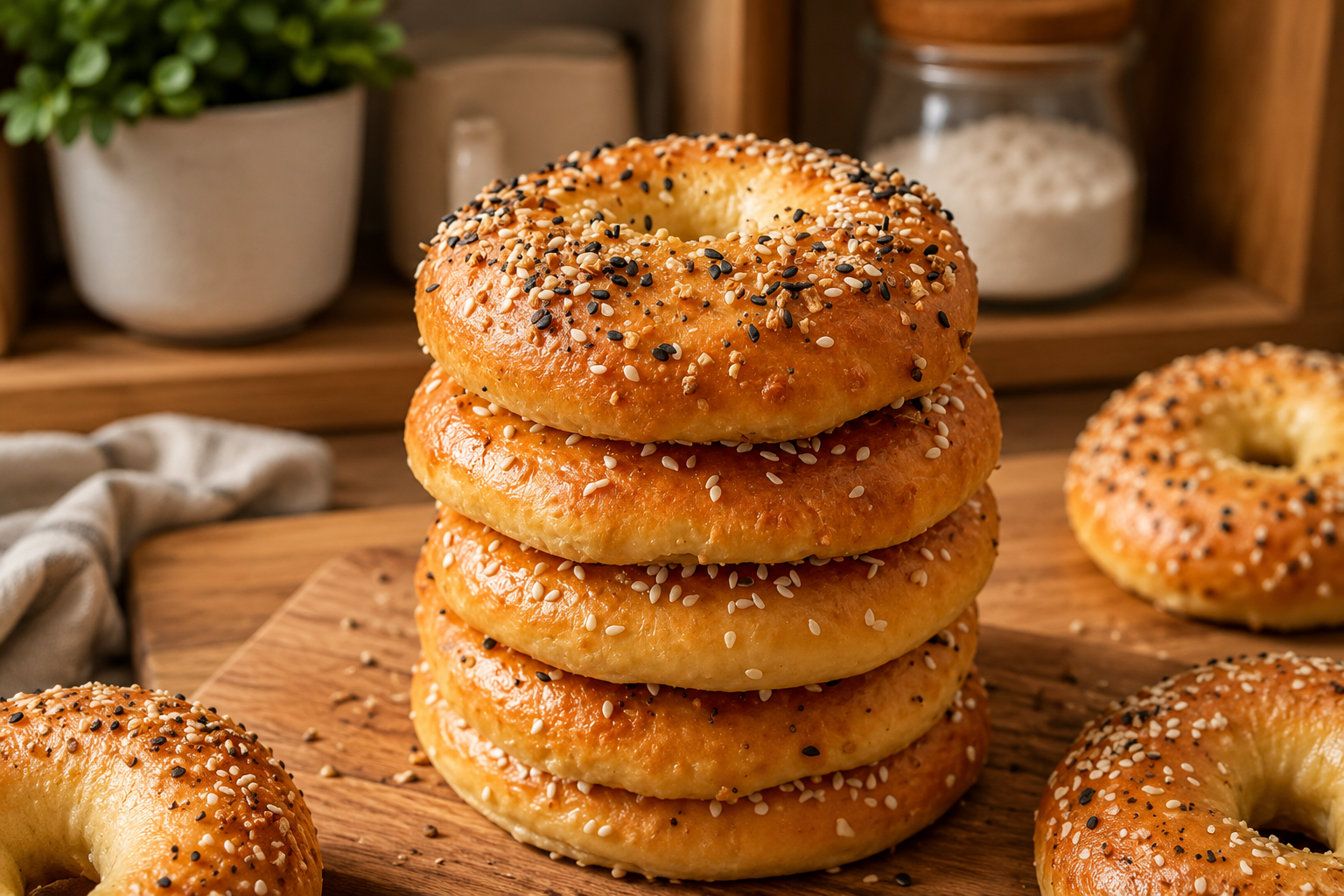
High Protein Bagels Simple Recipe
Quick homemade protein bagels made with flour, baking powder, salt, Greek yoghurt, and egg white. These yeast-free bagels contain approximately 10 grams of protein each and are ideal for breakfast meal preparation.
6
servings15
minutes25
minutes206
kcal10
minutes10
minutes1
hourIngredients
- Bagel Dough
2¼ cups all-purpose flour or bread flour
4 teaspoons baking powder
1 teaspoon kosher salt
1½ cups Greek yoghurt
- Egg Wash and Topping
1 egg white, lightly beaten
Sesame seeds or everything bagel seasoning
Directions
- Position a rack in the oven’s center.
- Preheat the oven to 350°F.
- Line a baking sheet with parchment paper.
- Whisk the flour, baking powder, and salt.
- Add the Greek yoghurt and mix into a dough.
- Turn the dough onto a clean surface.
- Divide it into six equal portions.
- Roll each piece into a 7–8-inch rope.
- Join the ends to form a ring.
- Place the bagels on the prepared tray.
- Rest for 5–10 minutes if possible.
- Brush each bagel with beaten egg white.
- Add sesame seeds or everything seasoning.
- Bake for 20–25 minutes until golden.
- Cool on a wire rack for 10 minutes.
Nutrition Facts
6 servings per container
- Amount Per ServingCalories206
- % Daily Value *
- Total Fat
2g
3%
- Total Carbohydrate
35g
13%
- Protein 10g 20%
* The % Daily Value tells you how much a nutrient in a serving of food contributes to a daily diet. 2,000 calories a day is used for general nutrition advice.