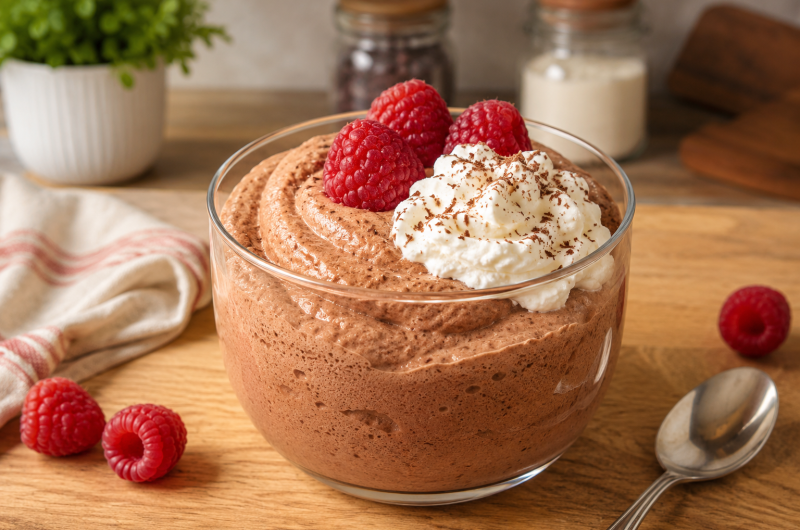
Cottage cheese chocolate mousse is a creamy, high-protein dessert made with simple ingredients and very little preparation. Instead of using heavy cream, raw eggs, melted chocolate, and a large amount of refined sugar, this lighter chocolate mousse uses blended cottage cheese as its base. Cocoa powder supplies the rich chocolate flavor, while peanut butter, honey, vanilla, and salt create a balanced and satisfying dessert.
This easy cottage cheese mousse is especially useful when you want something sweet without preparing a complicated recipe. All the ingredients are placed in a blender and processed until smooth. After blending, the mousse is divided between serving dishes and refrigerated for approximately two hours. The chilling time improves its consistency and gives the chocolate and vanilla flavors time to develop.
The finished dessert does not taste exactly like traditional French chocolate mousse, which normally has a richer texture created with cream, eggs, or whipped egg whites. Instead, this version has its own creamy consistency and a pleasantly light finish. It is an appealing choice for anyone searching for a quick high-protein chocolate dessert, a cottage cheese dessert recipe, or an easy no-bake mousse.
Why Cottage Cheese Works in Chocolate Mousse
Cottage cheese has a naturally mild and slightly tangy flavor. Its familiar curd-like texture changes completely when it is processed in a powerful blender. Thorough blending breaks down the curds and transforms the cheese into a thick, creamy base that works surprisingly well in both sweet and savory recipes. This smooth texture allows it to replace some of the heavier ingredients commonly used in chocolate mousse.
The slight tanginess of cottage cheese also complements the deep flavor of cocoa powder. In the same way that salt can make caramel or chocolate taste more intense, a mild dairy tang can help highlight cocoa’s complex flavor. Honey softens the bitterness of the cocoa, while vanilla adds warmth and peanut butter contributes richness, producing a chocolate dessert that tastes balanced rather than excessively sweet.
Full-fat cottage cheese is used in this recipe because it produces a smoother, creamier, and more satisfying mousse. Lower-fat or fat-free cottage cheese can have a thinner or less luxurious texture. Although substitutions may work in similar recipes, keeping the specified full-fat cottage cheese is the best way to reproduce the intended consistency without changing the original ingredient list.
A Lighter Alternative to Traditional Chocolate Mousse
Traditional chocolate mousse is usually prepared with ingredients such as heavy cream, eggs, sugar, butter, or melted chocolate. These ingredients create a rich and airy dessert, but they may also make it feel heavy. This healthy cottage cheese chocolate mousse takes a different approach by using cottage cheese to provide both creaminess and protein in one simple ingredient.
The result is lighter than a classic mousse but still rich enough to satisfy a chocolate craving. Cocoa powder provides concentrated chocolate flavor without requiring melted chocolate, while peanut butter adds smoothness and body. The dessert feels indulgent, yet it remains practical enough for an everyday snack, an after-dinner treat, or a make-ahead high-protein dessert.
This mousse is also convenient because it does not require cooking, baking, separating eggs, melting chocolate, or whipping cream. There is no need to monitor temperatures or fold delicate mixtures together. The blender handles almost all the work, making this one of the simplest cottage cheese dessert recipes for beginners or busy home cooks.
High-Protein Chocolate Dessert
Cottage cheese is naturally rich in protein, which gives this mousse an advantage over many ordinary desserts. Each serving provides approximately 15 grams of protein based on the supplied nutritional information. Protein helps make food more filling, so a serving of this mousse may feel more satisfying than a dessert made mainly from sugar and cream.
The protein content also makes it useful for people looking for a post-meal sweet, an afternoon snack, or a dessert that contributes more than sweetness alone. It can be included in a balanced diet without presenting it as a direct replacement for every traditional dessert. It is still a sweet recipe containing honey, but it offers a more substantial nutritional profile than many similar treats.
The mousse may be especially appealing to people who find the ordinary texture of cottage cheese difficult to enjoy. Once the cottage cheese has been blended with cocoa, honey, peanut butter, vanilla, and salt, the curds disappear and the mixture develops a completely different character. This makes the recipe a practical way to use cottage cheese in a smooth and enjoyable form.
Nutritional Benefits of the Main Ingredients
Cottage cheese contributes protein, calcium, and several B vitamins. These nutrients support normal body functions, although the exact amount will depend on the brand of cottage cheese used. Because the recipe uses full-fat cottage cheese, the dessert also has a richer texture and more satisfying mouthfeel than it would with a completely fat-free product.
Cocoa powder gives the mousse its deep chocolate taste and naturally contains plant compounds called polyphenols. It also adds a small amount of fiber and minerals. Unsweetened cocoa can taste bitter on its own, but the honey balances that bitterness and allows the chocolate flavor to remain noticeable without requiring a large amount of solid chocolate.
Peanut butter provides additional protein, flavor, and fat. Its smooth texture helps the blended mousse feel richer and more cohesive. It also contributes monounsaturated and polyunsaturated fats. Because the original recipe specifically uses peanut butter, it has been kept unchanged in the recipe card rather than replaced with a different nut or seed butter.
Honey supplies the sweetness needed to balance the tangy cottage cheese and unsweetened cocoa powder. Four tablespoons create a clearly sweet dessert, while vanilla extract rounds out the chocolate flavor. A small pinch of salt may seem minor, but it reduces flatness and helps the cocoa, peanut butter, honey, and vanilla taste more distinct.
Choosing the Right Cottage Cheese
The cottage cheese is the foundation of this high-protein chocolate mousse, so its texture and flavor can influence the final result. Full-fat cottage cheese generally blends into a thicker and creamier mixture. A mild-tasting variety is particularly suitable because it allows the cocoa, peanut butter, honey, and vanilla to remain the dominant flavors.
Some brands of cottage cheese contain more liquid than others. If the product looks especially watery, stir it before measuring so the curds and liquid are evenly distributed. Do not drain it unless the product contains an unusually large amount of separated liquid, because changing the moisture content may also change the intended consistency and serving yield.
A high-speed blender produces the smoothest mousse, but an ordinary blender can also work if the mixture is processed for long enough. Stop occasionally and scrape down the sides if necessary. Continue blending until no visible curds remain and the mousse looks uniform, glossy, and creamy.
Creating a Rich Chocolate Flavor
Three tablespoons of cocoa powder provide the chocolate foundation for this recipe. Unsweetened cocoa works well because the honey already supplies sweetness. The combination of cocoa and peanut butter creates a familiar chocolate-peanut flavor, while the vanilla extract softens any harsh bitterness and makes the dessert smell warmer and sweeter.
A pinch of salt is equally important. Salt should not make the mousse taste salty; its purpose is to sharpen the chocolate flavor and balance the honey. Because a “pinch” can vary, begin with a very small amount. The ingredients can be blended completely and tasted before the mousse is transferred to the serving dishes.
Blend the mixture thoroughly rather than stopping as soon as the ingredients appear combined. A smooth cottage cheese mousse depends on breaking down every curd. The blending time may vary according to the machine, but the correct texture should look creamy and free from visible white pieces of cottage cheese.
Why Chilling Improves the Mousse
The mousse can be eaten immediately after blending, but chilling it for approximately two hours produces a better result. Refrigeration allows the mixture to firm slightly and gives the cocoa, peanut butter, honey, vanilla, and cottage cheese flavors time to settle into a more unified taste.
Chilling also makes the dessert feel more like a prepared mousse rather than a freshly blended cottage cheese mixture. Divide it between three serving dishes before refrigeration so it is ready to serve later. Covering the dishes prevents the mousse from absorbing odors from other foods stored in the refrigerator.
If the mousse is refrigerated overnight, it may become slightly firmer. Stir it gently before serving only if needed. Avoid leaving the dessert at room temperature for an extended period because cottage cheese is a refrigerated dairy product and should remain properly chilled.
Topping Ideas for Cottage Cheese Chocolate Mousse
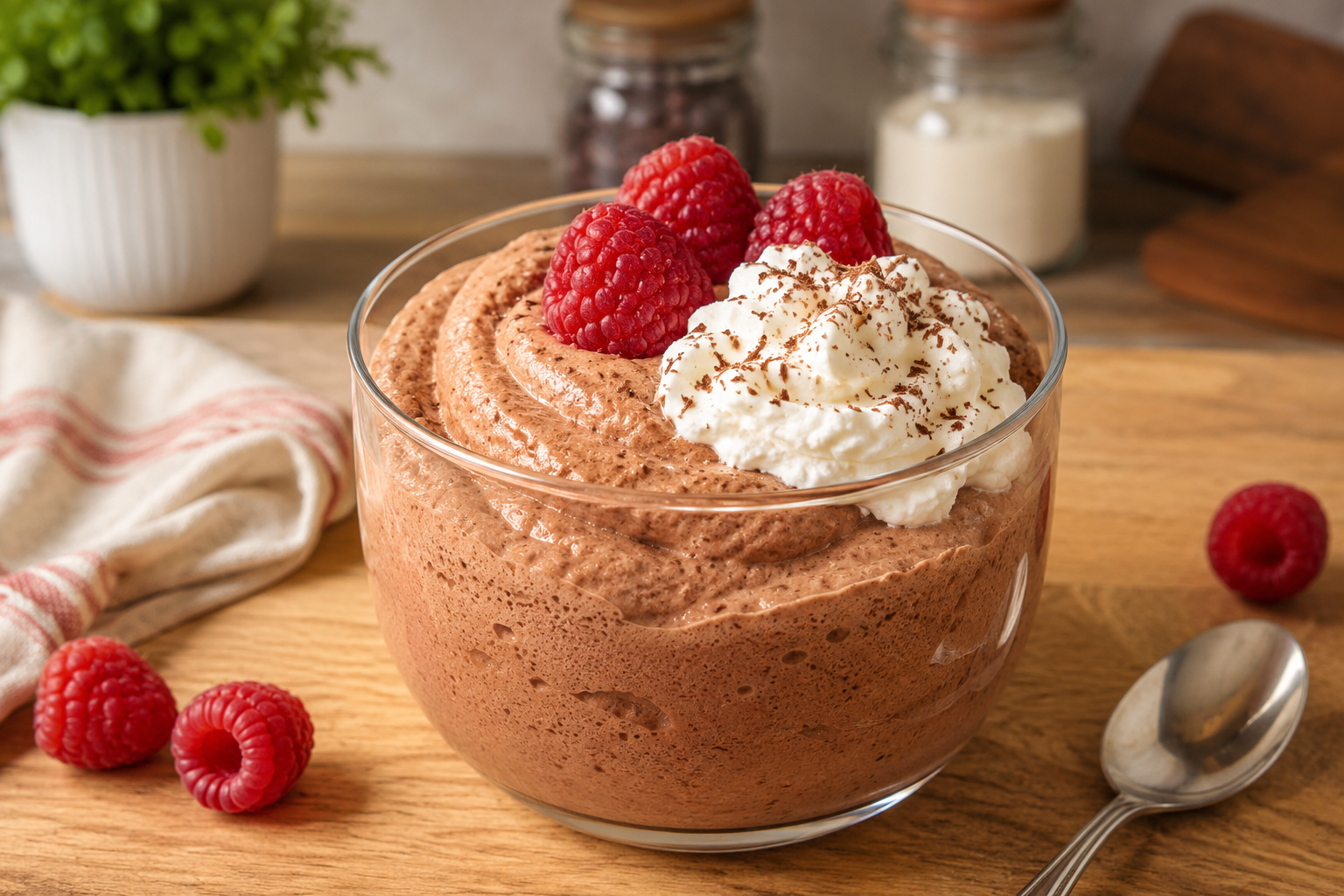
The original recipe provides several optional topping ideas. A drizzle of melted Biscoff spread adds sweetness and a caramelized biscuit flavor. Chopped dark chocolate intensifies the chocolate taste and provides a firmer texture. Chopped nuts add crunch, while fresh raspberries bring color and a slightly tart fruit flavor.
Toppings should be added in moderate amounts so they complement rather than hide the mousse. Fresh raspberries create a lighter finish, while Biscoff spread or chopped chocolate makes the dessert richer. Chopped nuts work well when extra crunch is desired, but they should be avoided when serving anyone with a nut allergy.
Because toppings are optional, the mousse can also be served without them. Its chocolate-peanut butter flavor is complete on its own. Leaving it plain also keeps preparation short and makes the supplied nutritional information more representative of the basic recipe, since additional toppings will change the calories, carbohydrates, fat, and sugar per serving.
Serving Suggestions
This cottage cheese chocolate mousse makes three servings, making it suitable for a small household or a simple make-ahead dessert. Divide the mixture evenly between small glasses, bowls, jars, or dessert cups. Transparent serving glasses can display the smooth chocolate color and any toppings added immediately before serving.
The mousse works well as an after-dinner dessert, a chilled afternoon snack, or a sweet option after exercise when paired with an otherwise balanced meal. Its creamy consistency also makes it suitable for serving at informal gatherings where a quick no-bake dessert is preferred over a cake, pie, or traditional mousse.
For the best eating experience, serve the mousse cold but not frozen. Take it from the refrigerator shortly before serving and add any chosen toppings at the last moment. Crunchy toppings can soften if they sit on the mousse for several hours, while fresh raspberries may release juice during extended storage.
Storage Instructions
Store cottage cheese chocolate mousse in covered serving dishes or an airtight container in the refrigerator for up to three days. Keeping it covered protects its flavor and prevents the surface from drying out. If the entire mixture is stored in one container, divide it into individual servings immediately before eating.
Fresh raspberries and crunchy toppings are best added after storage rather than before it. This helps the fruit remain fresh and prevents chopped nuts, dark chocolate, or biscuit spread from affecting the mousse’s smooth surface. Always use a clean spoon when removing a portion from a larger storage container.
This dessert is useful for advance preparation because the active work takes only about five minutes. It can be blended in the morning or evening, divided into dishes, and kept refrigerated until required. The two-hour chilling time makes it easy to prepare before dinner and serve later without further work.
Important Notes for the Best Texture
Blend the mixture until it is completely smooth. Stopping too early may leave small cottage cheese curds in the mousse and prevent it from developing the intended creamy consistency. Scrape the sides and bottom of the blender container when necessary so that the cocoa, peanut butter, honey, vanilla, and salt are distributed evenly.
Use full-fat cottage cheese as listed for a creamier result. The thickness may vary slightly depending on the cottage cheese brand and the amount of liquid it contains. Refrigerating the mousse for the complete two hours will help the mixture settle and create a thicker, more dessert-like texture.
The supplied nutritional values apply to the basic mousse divided into three servings. Optional toppings are not included because the amount selected can vary considerably. Adding Biscoff spread, chocolate, nuts, or raspberries will change the final calories and other nutritional values.
Why This Recipe Is Worth Making
This high-protein cottage cheese chocolate mousse offers a practical balance between convenience, flavor, and nutrition. It requires only six main ingredients, takes about five minutes to prepare, and does not require baking. The blender creates the creamy texture, while refrigeration completes the preparation.
It is naturally gluten-free when every packaged ingredient used is certified or verified as gluten-free. It is also soy-free when soy-free brands are selected. However, the recipe contains dairy and peanuts, so it is not suitable for people who must avoid those ingredients.
The combination of chocolate, peanut butter, honey, and vanilla makes the mousse taste familiar and satisfying, while the cottage cheese provides a lighter base than heavy cream. For anyone seeking an easy cottage cheese dessert, a healthy chocolate mousse alternative, or a quick high-protein sweet treat, this recipe is a simple option worth trying.
Cottage Cheese Chocolate Mousse Recipe
A creamy, high-protein chocolate mousse made by blending full-fat cottage cheese with cocoa powder, peanut butter, honey, vanilla, and salt.
3
servings5
minutes0
minutes262
kcal120
minutes2
hours5
minutesIngredients
- Chocolate Mousse
300 g full-fat cottage cheese
2 tablespoons peanut butter
4 tablespoons honey
3 tablespoons cocoa powder
Pinch of salt
½ teaspoon vanilla extract
- Optional Toppings
Melted Biscoff spread
Chopped dark chocolate
Chopped nuts
Fresh raspberries
Directions
- Place all mousse ingredients in a blender.
- Blend until completely smooth, scraping the sides if needed.
- Divide the mousse between three serving dishes.
- Refrigerate for 2 hours.
- Add optional toppings and serve chilled.
Nutrition Facts
3 servings per container
- Amount Per ServingCalories262
- % Daily Value *
- Total Fat
11g
15%
- Total Carbohydrate
32g
12%
- Protein 15g 30%
* The % Daily Value tells you how much a nutrient in a serving of food contributes to a daily diet. 2,000 calories a day is used for general nutrition advice.